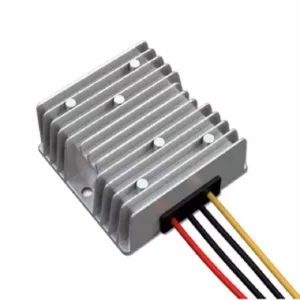
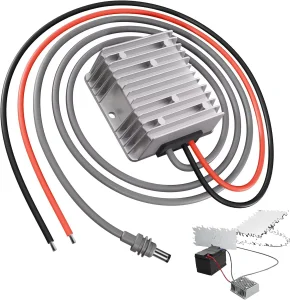
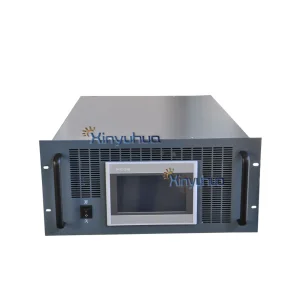
High-efficiency, industrial-grade voltage boosting solutions engineered to withstand harsh environments. Optimized for solar PV arrays, remote telecom networks, safari vehicles, and mining operations across Namibia.
Send Inquiry NowOur premium-performance power boosting modules designed for immediate deployment in Namibian infrastructure.
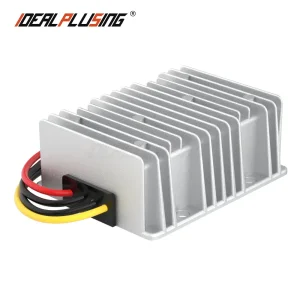
Production Base
R&D Power Engineers
Customized Product Models
Standard Warranty Period
Namibia's vast geography, combined with its rapidly growing commercial and industrial sectors, presents a unique challenge for power infrastructure. With high solar irradiance peaking in regions like Erongo and Karas, off-grid microgrids and solar-powered utility networks are essential. However, distributing and regulating this power requires robust components. Step-up DC-DC converters act as the critical bridge, boosting low-voltage generation from solar arrays or battery banks to run high-voltage devices, telecom infrastructure, and industrial machinery.
Unlike standard indoor power modules, DC-DC step-up converters operating in Namibian mines or remote agricultural fields must combat extreme thermal cycling—where temperatures swing from sub-zero winter nights to 45°C desert days—and highly abrasive silica dust. Standard fan-cooled converters quickly fail due to dust clog. Our solution implements IP67 silicone-potted, fanless, die-cast aluminum heat sinks that dissipate heat passively while protecting against environmental ingress.
1. Off-Grid Telecom Towers & Remote Lodges (MTC & Telecom Namibia Networks): Remote telecommunications rely heavily on solar installations. Operating at standard 12V or 24V battery systems limits the distance power can travel without experiencing severe line drop. Using 12V to 56V or 57V step-up modules allows system integrators to feed PoE equipment and Starlink Gen3 terminals directly from local battery storage systems, maintaining stable, long-distance power distribution.
2. Commercial Mining & Exploration: The uranium mines at Rossing and Husab, alongside gold mining activities in central Namibia, demand rugged, vibration-resistant converters. Whether stepping up vehicle battery power for specialized onboard monitoring systems or adapting microgrid voltages (up to 1000V DC) for extraction machinery, high-reliability conversion is mandatory to avoid costly downtime.
3. Tourism, Off-Road Safari, and Fleet Logistics: The safari industry in Namibia relies on custom-outfitted 4x4 vehicles. These vehicles utilize heavy-duty dual battery installations running winch equipment, communications, refrigeration, and specialized recovery devices that demand 24V, 36V, or 56V power systems stepped up from the vehicle's native 12V alternator output.
Completely sealed against dust ingress and water exposure, ideal for Namibia's sandy conditions.
Designed to operate seamlessly in extreme environments, ranging from -40°C to +85°C ambient conditions.
Integrated over-voltage, short-circuit, over-load, and over-temperature safety safeguards.
As a leading Chinese national high-tech enterprise founded in 2004 and listed on the new third board, ShenZhen JDI Power Supply Co., Ltd. operates a specialized 6,000-square-meter manufacturing facility. Buying direct from the manufacturer allows Namibian distributors, electrical contractors, and utility firms to leverage:
Explore our diverse selection of standard and high-power boost converters ready for import to Namibia.
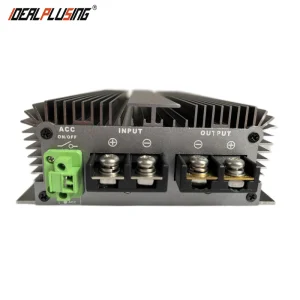
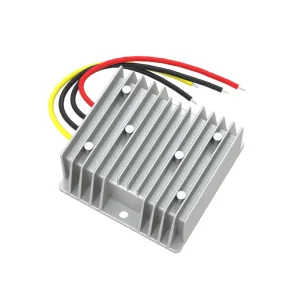
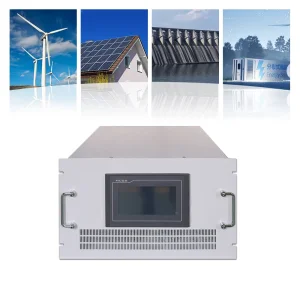
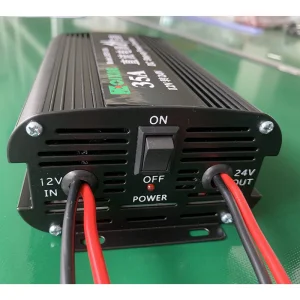
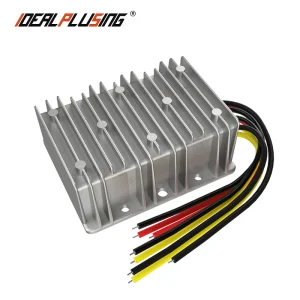
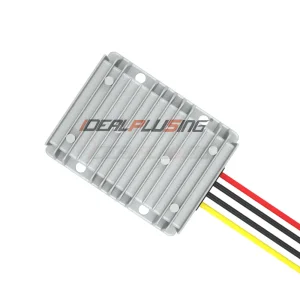
Operating from Shenzhen, the global capital of electronics hardware innovation, JDI Power has been at the forefront of custom power engineering since 2004. With a dedicated 6,000-square-meter facility, we provide high-performance solutions engineered for stability, longevity, and efficiency. All our products comply with international safety frameworks, ensuring they are ready for global deployment.
Our team of more than 20 R&D engineers, guided by an industry specialist with 27 years of power architecture design experience, keeps us ahead of current efficiency requirements. We produce over 1,000 active models deployed across industries like medical systems, consumer electronics, industrial automation, telecommunications, and high-power vehicle modifications.
In order to adapt to the increasingly intense environmental challenges in off-grid applications, our ISO9001:2008 and ISO14001 certified laboratory implements advanced stress testing protocols, including:
Find expert answers to common queries regarding importing and utilizing step-up converters in Namibia.
Namibia is home to highly arid and dust-heavy zones like the Namib Desert. Sand and dust particles can easily penetrate standard fan-cooled converters, leading to component failure or overheating. An IP67 rating ensures the module is completely sealed against dust ingress and can withstand submersion in water, making it ideal for safari 4x4 installations, agricultural irrigation controls, and mining equipment.
Our industrial converters are built using high-thermal-conductivity aluminum cases and filled with high-grade thermal silicone. This enables passive heat dissipation without the need for vulnerable cooling fans. They are designed to operate at full load up to +50°C ambient, with linear derating up to +85°C, ensuring safety even in intense heat.
Yes. Our "12 Step up to 57V DC-DC Voltage Converter for Starlink Gen3" is specifically designed to step up standard 12V or 24V battery outputs to the stable 57V required by Starlink Gen3 terminals, enabling reliable off-grid connectivity for rural lodges, research stations, and mobile operations.
Our converters are engineered with five essential layers of safety protection: Over-Current Protection (OCP), Over-Voltage Protection (OVP), Under-Voltage Lockout (UVLO), Short-Circuit Protection (SCP) with auto-recovery, and Over-Temperature Protection (OTP) to prevent thermal runaway.
Absolutely. Backed by our specialized R&D team and testing labs, we offer custom voltage profiling, tailored cable lengths, and custom output connector assemblies. Contact our sales team to discuss your project requirements.
For standard models, manufacturing takes 7-15 business days. Sea freight to the Port of Walvis Bay generally takes 30-40 days. For urgent projects, express air freight to Windhoek Airport delivers within 7-10 business days.
Connect directly with our senior application engineers to discuss customization, bulk shipping rates, and project pricing tailored for Namibian distributors and commercial operations.
Send Inquiry Now JDI Power Supply