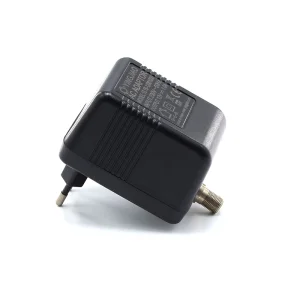
High-performance charging modules, step-up/step-down converters, and medical-grade adapters engineered to meet international safety and environmental guidelines.
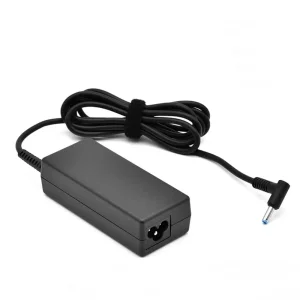
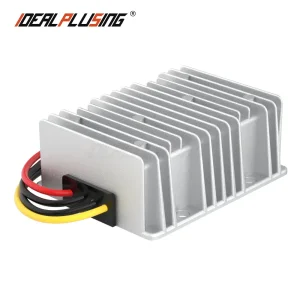
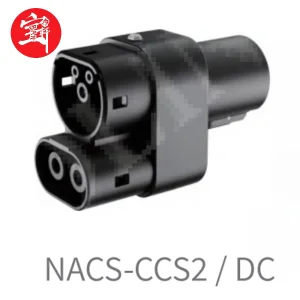
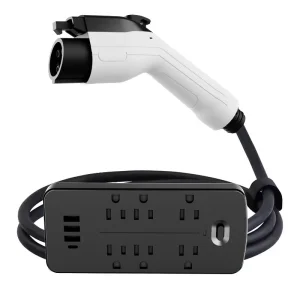
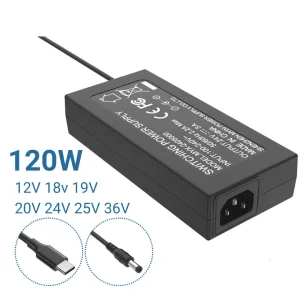
The global automotive power conversion and charging technology sector is undergoing an unprecedented evolutionary shift. Driven by the rapid transition towards electric vehicles (EVs), the expansion of cellular vehicle-to-everything (C-V2X) architectures, and the demands of modern logistics fleets, the requirement for robust, highly efficient in-vehicle power systems has skyrocketed. Today's commercial vehicles, heavy-duty industrial machinery, and passenger vehicles require power converter systems capable of maintaining strict voltage regulation under extreme thermal and mechanical strain.
Modern in-vehicle power delivery architectures are transitionally moving from legacy 12V configurations to high-efficiency 24V, 36V, and 48V topologies. This change minimizes transmission losses and facilitates the integration of power-hungry on-board computer arrays, telematics, and heavy auxiliary equipment. As a leading high-tech manufacturer, we stand at the intersection of these advancements, providing industrial-grade step-up, step-down, and isolated DC-DC converters, pure sine wave power inverters, and high-efficiency AC-DC charging rectifiers that serve as the backbone of modern automotive and utility electronics.
Tailoring power adapter solutions for critical systems across varied municipal, commercial, and geographical environments.
Within large-scale distributions across North America and Europe, fleet vehicles rely on rugged DC-DC converters to step down high battery output (e.g., 48V to 24V or 12V) to safely power GPS tracking terminals, ELDs (Electronic Logging Devices), telemetry relays, and thermal sensors without risking voltage spikes.
For remote off-grid pumping systems, agricultural solar configurations, and field telematics, our heavy-duty MPPT solar converters and isolated step-down systems provide stable power delivery from solar arrays directly to DC induction equipment, operating reliably from -40°C up to +85°C.
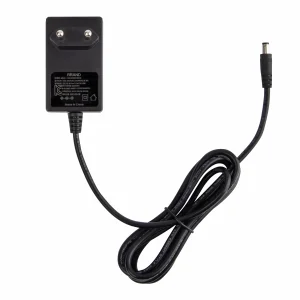
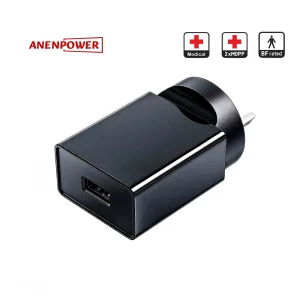
Medical environments demand strict safety margins. Our IEC 60601-1 certified wall adapters and desktop power units ensure isolated, low-leakage power flows for bedside monitors, ECG readers, and critical care displays, ensuring total compliance with global medical electronics standards.
Established in 2004 and situated in the high-tech hub of Shenzhen, China, ShenZhen JDI Power Supply Co., Ltd. is a national high-tech enterprise. Over the past two decades, we have focused on the design, research, development, and high-volume manufacture of professional, custom, and standard-setting power converters. Our independent 6,000 square meter production facility is equipped with modern, automated assembly lines, state-of-the-art diagnostic laboratories, and robust testing machinery designed to certify compliance with the highest standards of reliability.
Our core R&D infrastructure consists of more than 20 expert engineers, led by a Chief Power Design Specialist with over 27 years of experience in power topography, magnetics, and safety compliance. Today, our product catalog contains over 1,000 distinct power supply designs. These products are deployed globally in diverse fields including premium smart home appliances, LED commercial illumination, security arrays, telecommunications networks, heavy industrial instrumentation, and medical diagnostics.
To support product resilience in hostile electrical and physical environments, JDI Power maintains an advanced internal testing facility. We deploy testing methodologies such as:
Through this level of quality management, our products consistently secure critical regulatory safety approvals worldwide, including IEC/EN 60601, 62368, 60950, 61558, 60335, 60065, UL1310, and GB4706.
Designing modern in-vehicle and industrial power converters requires managing electrical losses, safety isolation, and electromagnetic interference. The illustration below highlights the typical workflow of our high-reliability power systems:
| Feature Stage | Technical Implementation | Operational Value |
|---|---|---|
| Pre-Filtering & TVS Protection | Transient Voltage Suppression (TVS) diodes and metal-oxide varistors (MOVs) filter raw vehicle power spikes. | Protects downstream microchips from load dump and engine cranking surge damage. |
| High Frequency Switching | Low-impedance MOSFET configurations switching at frequencies between 100kHz and 500kHz. | Minimizes physical magnetics and capacitor footprint while ensuring high power density. |
| Galvanic Isolation | Transformer-based magnetic barriers ensuring input-to-output dielectric strength up to 4000VAC. | Prevents high voltage leakage to protect terminal operators and sensitive measurement gear. |
| Output Synchronous Rectification | Active FET switching control replacing standard diodes on the output stage. | Reduces conduction losses, permitting higher output current capacity in sealed chassis. |
Every region around the world maintains different regulatory codes for electrical components. JDI Power has addressed this by obtaining compliance certs for all key importing economies:
Crucial engineering and procurement considerations answered by our senior technical staff.
High-efficiency power converters, medical adapters, and pure sine wave inverters designed for complex commercial integrations.
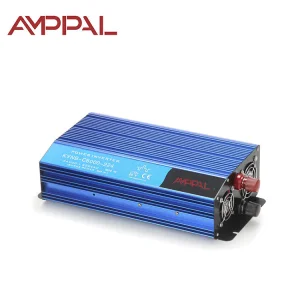
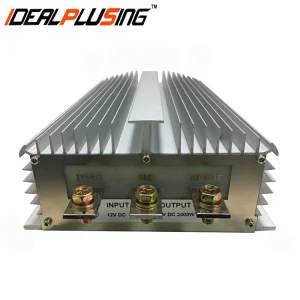
 JDI Power Supply