In the rapidly evolving global economy, power conversion devices serve as the backbone of modern technological infrastructure. From the delicate requirements of medical electronics to the robust demands of electric vehicle (EV) charging and industrial automation, the efficiency of power conversion defines the reliability of the system. Choosing the right supplier is no longer just about cost; it is about technological depth, global compliance, and supply chain resilience.
Modern converters must handle fluctuating loads with high MTBF (Mean Time Between Failures) and minimal thermal loss.
A top exporter must navigate complex cross-border regulations, ensuring "Land-to-Port" efficiency and duty compliance.
Adherence to IEC/EN 62368 and 60601 is mandatory for consumer safety and medical-grade reliability.
ShenZhen JDI Power Supply Co., Ltd. stands as a national high-tech enterprise, dedicated to the research, development, and production of professional-grade power converters. Founded in 2004 in the technology hub of Shenzhen, the company operates an independent 6,000 square meter production base equipped with first-class hardware and advanced testing facilities.
With a R&D team led by veterans boasting over 27 years of experience, JDI Power has developed over 1,000 distinct products. These range from high-efficiency switching power adapters to specialized medical-grade supplies and industrial-controlled instruments.
The "Shenzhen Model" offers unparalleled advantages for global procurement. As the epicenter of the world's electronics supply chain, factories here benefit from a massive ecosystem of raw material suppliers, specialized component manufacturers, and logistics experts. For global enterprises, this translates into:
Exporting power devices requires a deep understanding of local electrical standards. A "Top 10" supplier must provide localized support, including:
Focus on UL 1310, FCC Class B, and DOE Level VI energy efficiency mandates for the US and Canada.
Strict adherence to CE (LVD/EMC), ErP Eco-design, and the latest RoHS/REACH environmental standards.
Compliance with Japan’s PSE, Korea’s KC, and China’s own CCC/CQC standards for regional market entry.
As we look toward 2030, the power conversion industry is undergoing a paradigm shift driven by AI, sustainability, and the electrification of everything.
Gallium Nitride (GaN) and Silicon Carbide (SiC) are replacing traditional silicon. These materials allow for converters that are smaller, more efficient, and capable of operating at higher temperatures. This is critical for the next generation of EV Fast Chargers and Compact Power Adapters.
Modern power supplies are no longer "dumb" components. Through protocols like RS485, CAN bus, and SMBus, power devices can now communicate their health status, load efficiency, and temperature in real-time to central management systems, enabling predictive maintenance in industrial automation.
With the growth of renewable energy, hybrid converters—like the AC Generator-Battery Hybrid Converter—are becoming essential. These devices manage the transition between generator power and battery storage, ensuring stable power in off-grid or unstable grid environments.
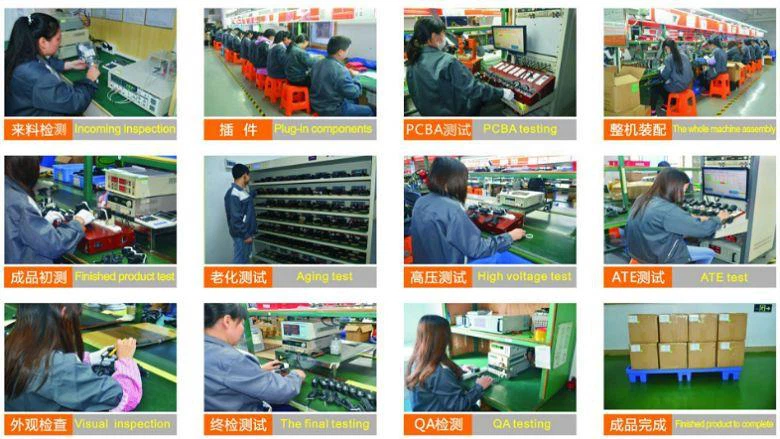
High reliability is not an accident; it is the result of exhaustive stress testing. At JDI Power, we employ international advanced testing means to ensure every unit meets the highest standards:
Our commitment ensures compliance with standards such as IEC/EN 60601 (Medical), 62368 (Audio/Video/ICT), and UL1310.
 JDI Power Supply