Explore our flagship high-frequency power electronics and stabilizers engineered for commercial resilience and industrial efficiency.
The global energy landscape is undergoing a massive structural transformation, characterized by the decentralization of power generation and the exponential rise of electrification. At the heart of this transition lies the modern high-frequency converter. In industrial and commercial applications, switching power supplies and converters are migrating from traditional silicon-based topologies to wide-bandgap (WBG) semiconductors, such as Gallium Nitride (GaN) and Silicon Carbide (SiC). This transition allows systems to operate at significantly higher switching frequencies, scaling down the size of passive components like magnetic cores and filter capacitors, which in turn dramatically enhances power density and thermal efficiency.
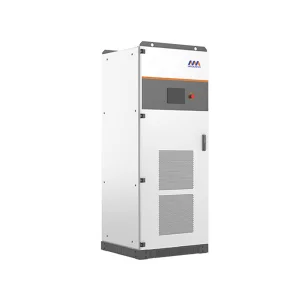
Beyond simple miniaturization, high-frequency converters are increasingly integrating advanced microprocessors to enable digital control loops. These intelligent topologies facilitate real-time monitoring of voltage, current, and temperature, enabling predictive maintenance algorithms. In applications such as three-phase energy storage bi-directional converters (PCS), these converters play an essential role in stabilizing grid irregularities. By transitioning between grid-forming and grid-following configurations in milliseconds, bi-directional systems prevent localized brownouts and maximize the dynamic self-consumption rates of solar photovoltaic-battery installations.
"The integration of Wide-Bandgap (WBG) semiconductors like GaN and SiC in high-frequency converters has pushed system efficiency thresholds beyond 98.5%, reducing passive component volumes by up to 40%."
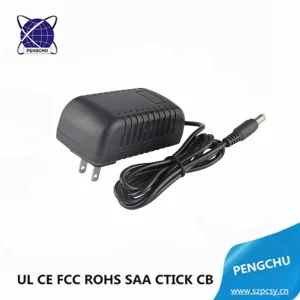
Global procurement managers face the daunting task of navigating disparate regulatory environments. Standard consumer, commercial, and medical equipment must satisfy complex certification matrices before hitting key regional markets. A single power adapter deployed globally must conform to safety regulations such as IEC/EN 62368-1 for audio/video and IT equipment, IEC/EN 60601-1 for medical grade performance, and UL 1310 / GB 4706 for household power applications. Energy efficiency benchmarks—such as Level VI (DOE/CEC) and ErP regulations in the European Union—mandate ultra-low standby power losses and high active-mode average efficiency.
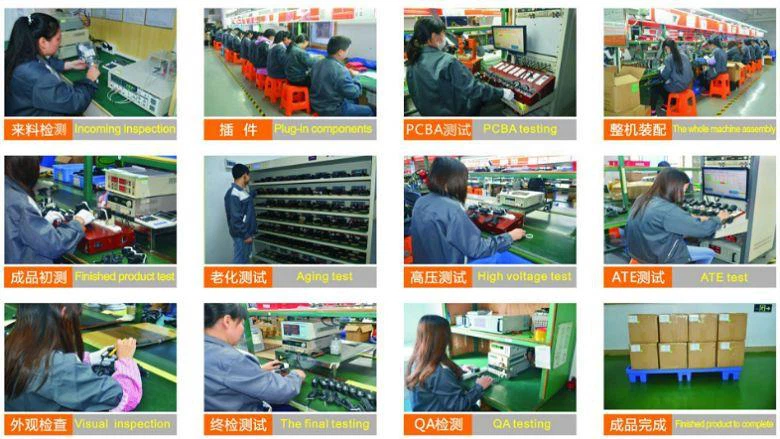
To maintain zero-defect supply chains, procurement officers prioritize suppliers with comprehensive, in-house quality verification laboratories. Relying on third-party certification is insufficient; suppliers must display robust testing parameters including component stress analysis, thermal cycle profiles, MTBF (Mean Time Between Failures) calculations, and FMEA (Failure Mode and Effects Analysis). Choosing a vendor that performs systematic in-house validation dramatically reduces field failures, saving companies millions in warranty claims and brand reputation damage.
Strict adherence to global regulatory protocols ensuring seamless entry into major regions like North America, Europe, Japan, and Australia.
Configured with state-of-the-art EMI/EMC testing chambers, multi-axis vibration analysis systems, and thermal shock cyclers.
Calculation of realistic MTBF parameters and validation of electrical stress factors under maximum thermal conditions.
Established in 2004 in the heart of Shenzhen's high-tech manufacturing cluster, ShenZhen JDI Power Supply Co., Ltd. stands as a premier national high-tech enterprise. Spanning a 6,000 square meter automated production base, JDI Power houses top-tier hardware facilities and operates in strict accordance with the ISO9001:2008 and ISO14001 quality and environmental management standards. With a dedicated development team of over 20 engineers led by a chief designer boasting 27 years of veteran power electronics research experience, JDI Power has compiled an expansive catalog of more than 1,000 standardized and custom-engineered power conversion products.
To thrive amid fierce market competition, the factory's advanced internal testing laboratory utilizes sophisticated analytical instruments. Every unit undergoes rigorous stress examinations: high and low-temperature cycle profiles, mechanical vibration analysis, direct physical impact tests, alternating hot and humid environment aging, dynamic safety evaluation, EMC/EMI scans, MTBF analysis, and comprehensive FMEA point checks. This obsessive approach to quality control guarantees that the factory's switching power adapters, chargers, linear power adaptors, and intelligent control modules easily comply with international safety standards like IEC/EN 60601, 62368, 60950, 61558, 60335, and UL1310/GB4706.
High-frequency conversion topologies designed to power mission-critical infrastructure across sectors.
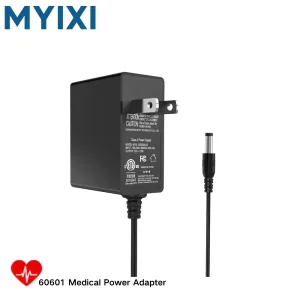
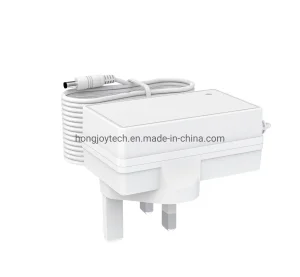
Medical-grade switching adapters and DC-DC converters built with double reinforced isolation barriers to comply with 2xMOPP classification under IEC 60601-1, preventing electrical leakage in close-patient monitoring devices.
Three-phase bi-directional energy storage converters (PCS) that facilitate power flow management, linking battery banks to the grid with integrated isolation transformers, maximizing safety and utility stability.
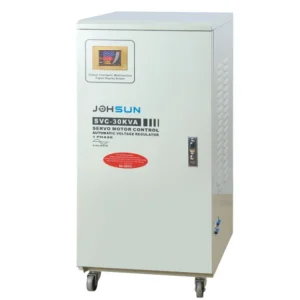
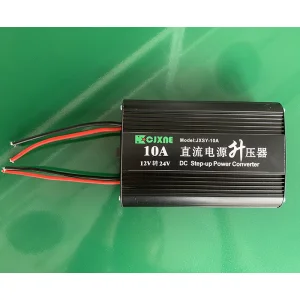
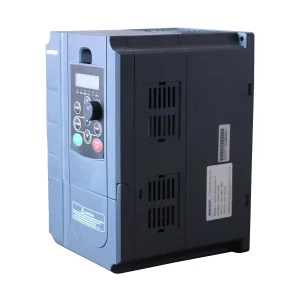
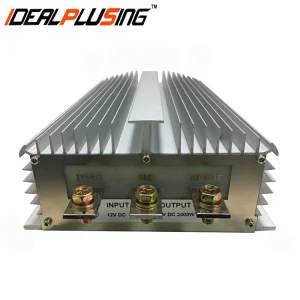
Variable frequency converters (VFD) and high-current step-down step-up DC-DC converters that drive robotic arms, automated conveyor lines, and heavy-duty servo stabilizers with ultra-low electromagnetic profile.
Get answers to critical technical questions to assist your procurement decisions and project designs.
High-frequency converters reduce the bulk of magnetic components (like transformers and inductors) because the required core volume is inversely proportional to operating frequency. Consequently, high-frequency systems occupy a fraction of the footprint, feature lower transport costs, and enable fast transient response loops compared to low-frequency converters.
Isolation transformers create galvanic isolation between the battery energy storage system (BESS) and the utility grid. This physical separation prevents DC fault currents from entering the AC distribution grid, provides high common-mode noise rejection, and protects sensitive control systems from utility-side lighting and surge damage.
Our medical power adapters comply with the IEC 60601-1 certification standard. We maintain generous creepage and clearance distances within the PCB layout, execute comprehensive high-potential (hipot) isolation tests up to 4000VAC, and ensure leakage currents remain well below strict physiological limits.
Our quality control protocols incorporate multiple verification steps: component-level thermal imaging, simulated shock and vibration runs, high/low-temperature thermal chamber cycles (-40°C to +85°C), electromagnetic compliance (EMC) scanning, and accelerated long-term aging under full electrical load conditions to verify MTBF expectations.
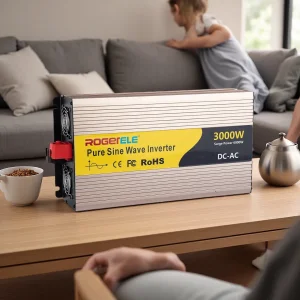
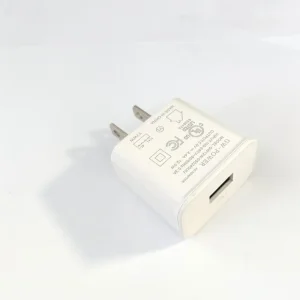
High-efficiency DC-AC, DC-DC step converters, and specialized adapters designed to operate under rigorous conditions.
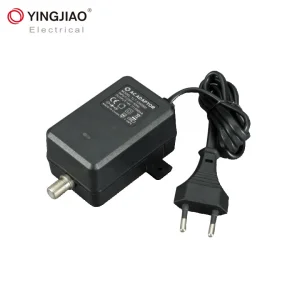
 JDI Power Supply