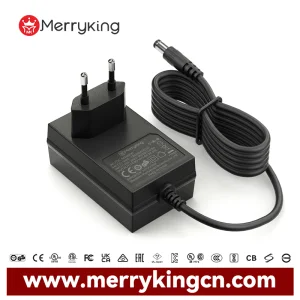
High-efficiency conversion architectures tailored for telecom, localized security matrices, and industrial automation across Bamako and regional hubs.
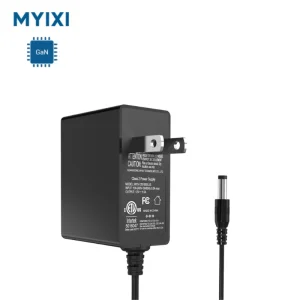
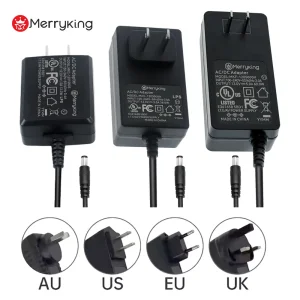
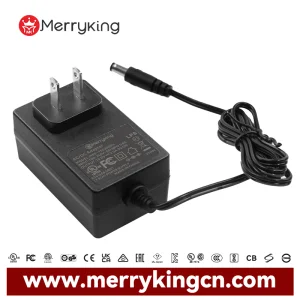
A technical whitepaper examining the intersection of high-frequency switching technology and the infrastructural demands of the West African macroeconomic landscape.
Mali's economic landscape, deeply anchored in gold mining, agricultural processing, and expanding telecommunications matrices, presents a distinct environment for electrical engineering deployments. The national grid system, managed primarily by Énergie du Mali (EDM), undergoes intense structural load configurations. For global enterprises deploying mission-critical hardware in administrative capitals like Bamako or distributed operational centers in Kayes, Sikasso, and Mopti, power continuity is a paramount challenge. Voltage fluctuations, transient spikes, and thermal stresses within rural solar mini-grids demand power conversion modules capable of wide-input ranges and high thermal resilience.
The acceleration of off-grid solar deployments and localized hybrid networks underscores the need for high-efficiency AC to DC power adapters. These devices act as the final, critical interface between erratic distribution lines and sensitive electronic hardware. Without advanced over-voltage, over-current, and thermal regulation pathways, field equipment risks premature lifecycle exhaustion. This results in significant operational expenditure penalties for international infrastructure consortiums and localized enterprises alike.
Macro-Infrastructural Insight: Power conversion units deployed within Sub-Saharan manufacturing and communication frameworks must exhibit a mean time between failures (MTBF) exceeding 100,000 operational hours under continuous 45°C ambient thermal profiles to withstand the demanding local operating environments.
Modern electrical conversion topologies have evolved beyond traditional linear regulation frameworks toward high-frequency switching power supplies (SMPS). Our technical development vectors focus directly on implementing Gallium Nitride (GaN) semiconductor materials alongside optimized Silicon (Si) architectures. For the Malian market, where ambient air temperatures regularly cross thermal thresholds, GaN adapters present an extraordinary engineering advantage. They fundamentally minimize heat dissipation by lowering switching losses, achieving energy conversion efficiencies above 92%.
By migrating to GaN-based Class 2 power topologies, electronic product designers can compress package dimensions while doubling power density metrics. This design consideration is critical for localized security integrations, distributed wireless internet loops, and clinical diagnostic setups in remote medical clinics across Mali. These installations must operate efficiently within enclosures lacking forced-air ventilation or active refrigeration.
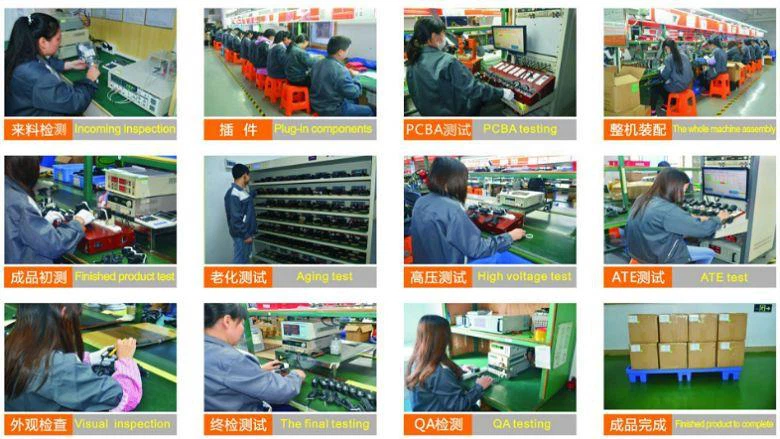
As a premier national high-tech enterprise founded in 2004 and operating from an independent 6,000 square meter production facility, ShenZhen JDI Power Supply Co., Ltd. embeds rigorous quality validation processes within every assembly phase. Managed under international Quality Management System standards including ISO 9001:2008 and Environmental Management System protocols like ISO 14001, our engineering facility balances large-scale manufacturing output with tailored engineering precision. Our specialized internal testing laboratory incorporates advanced diagnostic equipment to run multi-point stress analyses, extreme high-and-low temperature cycle metrics, vibration profiling, and structural impact metrics.
Furthermore, to guarantee operational durability on the West African electric grid, our adapters are subjected to continuous alternating hot and humid testing, comprehensive electro-magnetic compatibility (EMC) mapping, accelerated lifecycle aging protocols, and Failure Modes and Effects Analysis (FMEA) critical points review. This complex evaluation suite ensures that all exported shipments line up directly with worldwide safety frameworks. This validation is critical for enterprise groups organizing supply lines into developing economic zones.
Manufacturing Deep-Dive: Our R&D division is spearheaded by a senior power conversion engineer holding over 27 years of dedicated domain expertise. This deep organizational knowledge enables the rapid development of customized AC-to-DC converters matching complex specifications across multiple applications. This includes medical equipment requiring adherence to IEC/EN 60601 certifications, as well as consumer IT hardware networks requiring conformity with IEC/EN 62368 regulatory standards.
Engineered for international distribution networks and large-scale industrial deployment matrices.
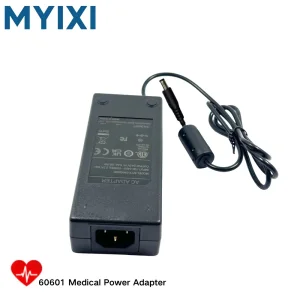
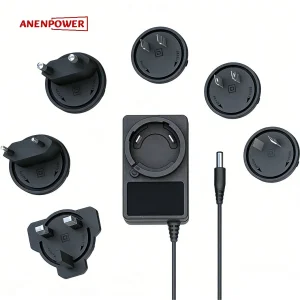
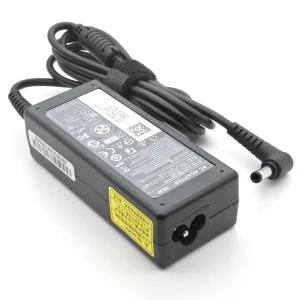
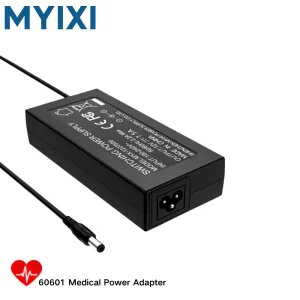
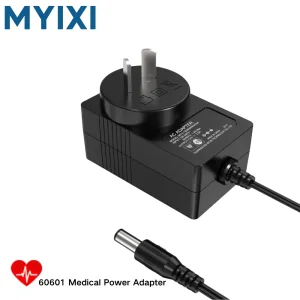
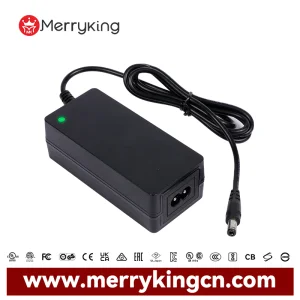
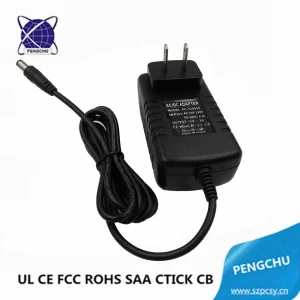
Our power conversion units are designed with an expansive structural input threshold covering 90V to 264V AC at 50-60Hz frequencies. This ensures continuous DC voltage normalization even during severe grid drops or local brownouts. Integrated metal oxide varistors (MOVs) provide advanced transient surge attenuation, defending internal components from rapid high-voltage transients caused by grid switching or atmospheric disturbances.
All adapters incorporate multi-layer over-temperature protection (OTP) mechanisms. If the internal junction temperatures climb past safe operating thresholds due to extreme ambient heat (common in places like Kayes or Tombouctou), the adapter safely throttles its power delivery or initiates a protective thermal shutdown. Once safe conditions return, the circuit automatically resumes normal operation. The enclosures utilize flame-retardant, high thermal conductivity polycarbonate resins to optimize passive convective heat dissipation.
Yes. Backed by our 20+ person R&D group and guided by 27 years of deep industrial engineering expertise, we support comprehensive Original Equipment Manufacturer (OEM) and Original Design Manufacturer (ODM) production lines. We configure custom DC voltage outputs (ranging from 5V up to 56V), distinct wire topologies, interchangeable connector plugs (including European standard configurations), and custom housing shapes designed to meet complex specifications across IT, industrial automation, and healthcare sectors.
Our hardware undergoes precise independent testing to satisfy broad global safety frameworks, securing certifications including CE, GS, UL, cUL, FCC, PSE, SAA, KC, and CCC. Furthermore, our designs conform directly with international energy standards like DOE Level VI and ERP, alongside environmental safety mandates like REACH and RoHS. This complex certification strategy ensures seamless custom clearances and absolute operational compliance for corporate entities managing international cross-border deployment loops.
 JDI Power Supply