China Top Power Supplies Meet International Standards?

Time:2026-09-16 Author:Charlotte
0%

Can China’s leading power supplies truly meet international standards, or do certificates sometimes hide practical gaps? This question matters as chargers, adapters, and industrial supplies enter tightly regulated global markets. Buyers now examine safety, electromagnetic compatibility, efficiency, traceability, and production consistency—not only a printed CE or UL mark.

The International Energy Agency’s Electricity 2024 report highlights continuing electricity-demand growth from digital equipment and electrification. Efficiency is becoming harder to ignore. The European Commission’s Regulation (EU) 2019/1782 also sets specific requirements for external power supplies, including no-load consumption and active-mode efficiency. These requirements create measurable benchmarks for Chinese manufacturers. IEC 62368-1 addresses product safety, while IEC 61000 series standards guide electromagnetic compatibility testing. Together, they help companies Ensure compliance with international power supply standards across different markets.

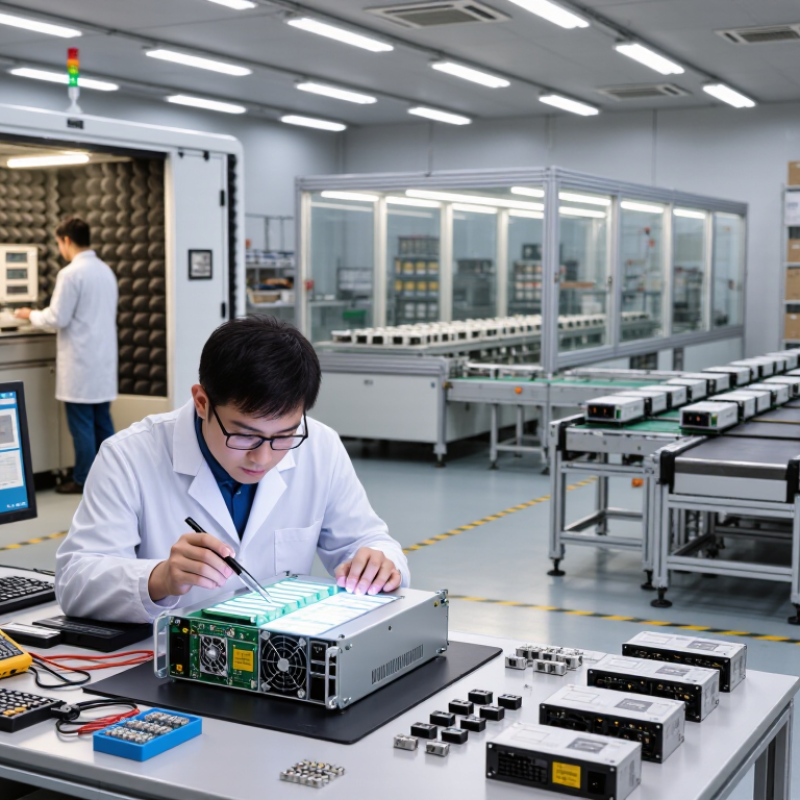
Real compliance begins inside the factory. Engineers review insulation distances, transformer temperatures, protection circuits, and conducted emissions. Auditors then compare laboratory results with mass-production samples. Small differences matter. A substituted capacitor can change ripple performance. A rushed firmware update can affect protection timing. Quality expert W. Edwards Deming warned, “Quality comes not from inspection, but from the improvement of the production process.” His observation remains relevant to power-supply manufacturing. Testing one sample is not enough. A certificate alone can mislead. Strong suppliers maintain controlled bills of materials, calibrated instruments, supplier audits, and corrective-action records. Still, no introduction should pretend that every factory performs equally. Verification remains essential, especially when buyers compare laboratory evidence with performance in real installations.
China Top Power Supplies Meet International Standards?

What International Standards Apply to Power Supplies Made in China?

For power supplies made in China, the governing requirements usually follow the destination market, not the manufacturing location. Safety testing often uses IEC 62368-1 for information and audio-video equipment, or IEC 61558 for specific transformer applications. In China, GB 4943.1-2022 broadly aligns with IEC 62368-1. EMC evaluation may involve CISPR 32 and CISPR 35, alongside their Chinese GB/T equivalents. Products covered by China’s compulsory certification catalogue may also need CCC approval. The exact route depends on voltage, output type, enclosure, and end equipment.

Europe commonly requires compliance with the Low Voltage Directive, EMC Directive, RoHS, and Ecodesign Regulation 2019/1782 for external power supplies. The United States applies FCC Part 15 for emissions and DOE energy-efficiency rules, including Level VI requirements for many external adapters. ENERGY STAR’s current program materials also emphasize active efficiency and no-load power, showing that a safe supply can still fail efficiency expectations. IEA’s Electricity 2024 report projects data-centre electricity demand could more than double by 2026, increasing pressure for efficient conversion equipment.

In factory audits, paperwork is only one checkpoint. Engineers should verify insulation distances, abnormal-operation tests, thermal rise, leakage current, EMC scans, and production consistency. A passed prototype is not enough. Components can change quietly. That is where compliance becomes less certain. Independent laboratory reports, traceable component records, and batch testing provide stronger evidence than a printed certificate alone.

How Chinese Manufacturers Test Electrical Safety and Performance

China Top Power Supplies Meet International Standards?

Reliable Chinese power supply manufacturers test safety and performance through controlled, repeatable procedures. Technicians use calibrated instruments and documented test plans. Every production batch may undergo insulation resistance and dielectric withstand testing. These checks help detect dangerous leakage between internal circuits and accessible surfaces.

Grounding continuity is measured with low-resistance equipment. Engineers also check input voltage tolerance, output regulation, ripple, overload protection, and short-circuit response. Thermal tests run units under demanding loads inside controlled chambers. Temperatures are recorded at transformers, capacitors, cables, and switching components. Some factories conduct extended burn-in testing. It can expose early failures before shipment.

Details matter. Test records should identify the operator, instrument, calibration date, and product batch. Independent laboratories may verify samples against applicable IEC, EN, or other market requirements. However, a passed sample cannot guarantee perfect mass production. Sampling can miss assembly mistakes. Rushed inspections can also weaken confidence. This is where traceability and honest review become essential. In practical factory audits, clear procedures often reveal more than impressive certificates. Engineers should question unusual readings, repeat failed tests, and document corrective actions. Small inconsistencies deserve attention. Reliable performance comes from disciplined testing, not paperwork alone.

China Top Power Supplies Meet International Standards?

This chart shows the minimum AC-to-DC efficiency thresholds commonly used by the 80 PLUS certification program for internal, non-redundant power supplies tested at 115 V AC. It compares performance at 20%, 50%, and 100% load.

Manufacturers typically combine efficiency testing with safety evaluation under IEC 62368-1, electromagnetic-compatibility testing, insulation and dielectric-strength checks, grounding verification, temperature-rise testing, and protection tests for over-voltage, over-current, short-circuit, and over-temperature conditions. Certification thresholds are reference benchmarks; actual compliance depends on the complete product and its test report.

Which Certifications Are Commonly Found on Chinese Power Supplies?

Which Certifications Are Commonly Found on Chinese Power Supplies?

Chinese power supplies often carry several marks, but each serves a different purpose. CCC is required for many products sold in China. CE indicates conformity with European Union requirements, although it is usually a manufacturer’s declaration, not a single laboratory approval. RoHS addresses restricted hazardous substances. FCC concerns electromagnetic emissions in the United States. UL, ETL, and the IEC CB Scheme provide stronger third-party testing evidence when the certificate matches the exact model.

IEC 62368-1 is widely used for information technology and audiovisual equipment. It evaluates electrical, thermal, and mechanical safety risks. This matters as electricity demand grows. The International Energy Agency’s Electricity 2024 report estimates that data centres used about 460 TWh globally in 2022. It projects consumption may exceed 1,000 TWh by 2026. Efficiency and safety claims therefore deserve careful checking, not casual trust. A logo can look convincing. Certification lists are not perfect.

Tips:

Match the certificate number with the model, voltage, and output rating. Search the issuing laboratory’s public database when possible. Check whether the document is current. Also inspect input protection, insulation markings, cable temperature ratings, and efficiency test results. The U.S. Department of Energy’s 2024 data-centre report warns that electricity demand could rise sharply by 2028. A certified unit still needs correct installation and ventilation. That part is often overlooked.

What Factors Affect Compliance Across Different Chinese Brands?

China’s power supplies can meet international standards, but compliance varies across manufacturers and product batches. The key factor is design discipline, not factory location. The U.S. Department of Energy’s Level VI procedure measures efficiency at 25%, 50%, 75%, and 100% load. A unit may pass at full load yet perform poorly during light office use. That gap affects heat, energy loss, and long-term reliability.

Component quality also matters. Capacitor temperature ratings, transformer insulation, solder consistency, and protection circuits influence certification results. IEC 62368-1 requires safeguards against electric shock, fire, and abnormal operating conditions. However, laboratory approval does not guarantee identical production quality. Factory audits, incoming inspection, and sample testing must continue.

The European Commission’s Regulation 2019/1782 limits no-load power to as little as 0.10 watts for some external supplies. Small details matter. Firmware, voltage calibration, and regional input testing can change results. In field checks, unstable output under sudden load changes often exposes weak engineering margins. This is where documentation can mislead. A certificate may cover one model revision, not every later component change. Buyers should compare test reports, traceable serial numbers, efficiency curves, protection test results, and warranty failure data. Independent retesting remains valuable, even when paperwork looks complete.

China Top Power Supplies Meet International Standards? - What Factors Affect Compliance Across Different Chinese Brands?
Compliance Dimension Relevant International or Chinese Framework Verified Requirement or Threshold Typical Objective Evidence How It Affects Cross-Market Compliance
Electrical Safety Design IEC 62368-1 and GB 4943.1 Uses a hazard-based safety approach covering electric shock, fire, energy sources, insulation, creepage, clearance, temperature, and abnormal operating conditions. Safety test report, construction review, insulation-system documentation, component approvals, and production samples. The same power supply may require different national editions, deviations, or certification procedures before market entry.
Electromagnetic Emissions CISPR 32 or applicable regional EMC standard Conducted and radiated emissions must remain below the limits for the applicable product class, installation environment, and frequency range. EMC laboratory report, test configuration, cable information, operating-mode records, and corrective-action history. Poor switching layout, insufficient filtering, long cables, or inconsistent grounding can cause failures even when the schematic appears compliant.
Electromagnetic Immunity CISPR 35 and IEC 61000-4 series Equipment is evaluated for immunity to electrostatic discharge, radiated RF, electrical fast transients, surges, conducted RF, and voltage disturbances. Immunity test results, performance-criterion records, reset or shutdown observations, and firmware or protection-circuit controls. A design that passes emissions testing can still fail immunity testing if surge protection, shielding, or control logic is inadequate.
Harmonic Current and Flicker IEC 61000-3-2 and IEC 61000-3-3 For applicable equipment connected to public low-voltage networks, harmonic current and voltage-change limits depend on equipment classification and rated input current. Power-quality test report using the declared input voltage, frequency, load, and operating mode. Power-factor-correction performance and input-stage design can determine whether a model is acceptable in particular markets.
Hazardous Substances EU RoHS Directive 2011/65/EU, as amended Restricts ten substances. Common maximum concentration values are 0.1% by homogeneous material for lead, mercury, hexavalent chromium, PBB, PBDE, DEHP, BBP, DBP, and DIBP, and 0.01% for cadmium. Material declarations, supplier declarations, laboratory screening, bills of materials, and controlled change records. Substitution of solder, plastics, cables, coatings, or electronic components can affect compliance after a design change.
REACH Chemical Communication EU REACH Regulation (EC) No. 1907/2006 Articles containing a Candidate List substance above 0.1% by weight may trigger communication obligations; additional duties can apply depending on the substance and supply-chain role. Supplier chemical declarations, Candidate List screening, material composition records, and customer communication procedures. Compliance depends on the complete product and supply chain, not only on the power-conversion circuit.
Energy Efficiency EU Regulation (EU) 2019/1782 and U.S. DOE external-power-supply requirements Efficiency and no-load power limits vary according to output power, voltage type, operating mode, and whether the unit is an external power supply or another equipment category. Average-active-efficiency measurements, no-load power results, rated-output records, and the exact tested model configuration. A product can meet safety and EMC requirements but still fail a market’s energy-efficiency rules because the limits and test methods differ.
Market Access Marking CE marking, UKCA where applicable, and China Compulsory Certification where listed CE marking requires the manufacturer or authorized representative to complete applicable conformity assessment and issue an EU Declaration of Conformity. CCC applies only to products within the applicable Chinese product catalogue and rules. Declaration of Conformity, technical file, risk assessment, certification documents where required, and marking-control records. A test report alone does not automatically authorize every market; the required conformity route depends on product type, destination, and legal scope.
Component Traceability Product-safety certification conditions and quality-management controls Critical components such as fuses, optocouplers, transformers, capacitors, relays, and insulation materials must remain within the evaluated specification and approval conditions. Approved vendor list, component certificates, lot traceability, incoming inspection records, and engineering-change approvals. Unauthorized substitutions are a frequent cause of compliance gaps between an originally tested sample and mass-produced units.
Production Consistency ISO 9001-based quality controls and applicable certification-factory requirements Documented processes should control assembly, soldering, insulation, hipot testing, grounding, calibration, nonconforming products, and final inspection. Factory audit records, process-control plans, calibration certificates, routine-test logs, and corrective-action reports. A certified design may not remain compliant if production variation changes safety distances, thermal performance, output regulation, or EMC behavior.
International Recognition IECEE CB Scheme A CB Test Certificate and CB Test Report can support national certification applications, but each destination may impose national deviations or additional requirements. Current CB certificate, complete CB report, national-deviation review, and destination-market certification file. CB documentation can reduce duplicated testing, but it is not a universal substitute for every country’s legal approval.
Documentation Accuracy Applicable conformity-assessment legislation and technical-file requirements Ratings, model numbers, input ranges, output limits, warnings, symbols, manuals, declarations, and test reports must describe the same product configuration. Controlled technical file, user manual, label artwork, declaration, schematic, bill of materials, and revision history. Inconsistent ratings or model identifiers can invalidate otherwise satisfactory test evidence during audits, customs checks, or customer qualification.
Compliance is product-specific and market-specific. The applicable requirements depend on the power-supply architecture, output rating, end-use equipment, destination country, installation environment, and current edition of the relevant regulations or standards.

How Buyers Can Verify a Power Supply’s Standards and Quality

When evaluating a power supply from China, do not treat a printed safety mark as final proof. Ask for the exact model certificate, issuing body, standard number, test date, and certificate scope. The model on the document must match the label, enclosure, input range, and output rating. A small suffix can indicate a different circuit. It matters.

Request the complete test report, not only a certificate image. Check whether the laboratory is accredited to ISO/IEC 17025. Confirm coverage of insulation, leakage current, temperature rise, abnormal operation, and electromagnetic compatibility. Verify the applicable edition of IEC or EN standards. Requirements change. A current document is stronger evidence than a familiar logo. Confirm the certificate directly through the issuing body when possible. Some files look professional but omit critical pages.

Verification should continue with physical samples. Measure output voltage under light, rated, and peak loads. Observe ripple, fan behavior, heat, and restart protection. Keep records with serial numbers and test conditions. Inspect soldering, cable strain relief, fuse placement, and protective earthing. Ask for component traceability, failure rates, and corrective-action records. During supplier audits, compare production units with the approved sample. Differences often appear in capacitors or connectors. A short sample test cannot predict every field failure. Use independent testing for safety-critical applications, and review documents whenever the design changes.

FAQS

How do manufacturers test electrical safety?

Technicians test insulation resistance and dielectric withstand. These checks detect leakage between internal circuits and touchable surfaces. Grounding continuity is also measured. No test catches everything.

Which performance tests are commonly performed?

Engineers check input tolerance, output regulation, ripple, overload protection, and short-circuit response. They test units under different load conditions. Sudden load changes can reveal unstable output.

Why are thermal tests important?

Thermal tests run power supplies under demanding loads. Controlled chambers record temperatures at transformers, capacitors, cables, and switching parts. Excessive heat may shorten service life.

What does burn-in testing reveal?

Extended burn-in testing can expose early failures before shipment. Units operate for long periods under controlled conditions. It is useful, but not perfect. Some faults may appear later.

Does passing a laboratory test guarantee production quality?

No. A passed sample cannot represent every production unit. Sampling may miss assembly mistakes or later component changes. Factory audits and repeated sample testing remain necessary.

Which components influence safety and efficiency?

Capacitor temperature ratings, transformer insulation, solder consistency, and protection circuits strongly affect results. Small component differences matter. Weak parts can increase heat or failure risk.

How can buyers check whether test records are reliable?

Records should identify the operator, instrument, calibration date, and product batch. Buyers should compare serial numbers with test reports. Missing details deserve direct questions.

Can a certificate cover every later production version?

Not necessarily. A certificate may cover only one model revision. Component changes can alter efficiency, protection, or temperature performance. Independent retesting is sometimes wise.

What should buyers verify before approving a power supply?

Review efficiency curves, protection results, regional input tests, warranty failure data, and traceable batch records. Check performance at light, medium, and full loads. Paperwork alone is not enough.

Conclusion

Power supplies made in China may be designed and tested according to widely recognized international standards covering electrical safety, electromagnetic compatibility, energy efficiency, insulation, temperature control, and operational reliability. Manufacturers commonly perform tests such as voltage stability checks, overload and short-circuit protection tests, leakage current measurements, insulation testing, thermal evaluations, and endurance trials. Certifications may include safety marks, electromagnetic compatibility approvals, and efficiency-related labels, depending on the destination market and product category. However, certification requirements and testing quality can vary among manufacturers and production facilities.

Compliance is influenced by component quality, circuit design, factory controls, documentation, and the consistency of production batches. Buyers should review test reports, certification numbers, technical specifications, protection features, and the identity of the testing laboratory. They should also confirm that the documents match the exact model and intended market rather than relying only on printed symbols. To reduce risks and support dependable operation, buyers should Ensure compliance with international power supply standards by requesting traceable records, checking current certification databases where available, and evaluating warranty and quality-control practices.

Charlotte

Charlotte

Charlotte is a seasoned marketing professional with a deep understanding of the company's portfolio and a passion for elevating its presence in the market. With a keen eye for detail and a commitment to excellence, she ensures that our professional blog is regularly updated with insightful articles......