A compact lightweight portable power converter changes electrical power without turning every trip into a packing problem. It may convert AC to DC, adjust voltage, or provide regulated output for a specific device. The right design depends on rated power, input range, cooling, and connectors—not size alone. A palm-sized unit can still run hot under sustained load.
The USB-IF’s USB Power Delivery 3.1 specification supports power levels up to 240 watts. That figure shows how much output a modern interface can provide; it does not guarantee that every small converter can deliver that power safely or continuously. The U.S. Department of Energy’s external-power-supply test procedures also emphasize active-mode efficiency and no-load power. Those measures matter in practice: losses become heat, while standby draw can quietly drain a battery. Small details matter.
“Optimize size and weight of portable power conversion equipment” is therefore an engineering trade-off, not a simple slimming exercise. Dr. Alex Lidow, an established power-electronics engineer and Efficient Power Conversion co-founder, has written extensively about wide-bandgap devices such as gallium nitride. An editorial paraphrase of the design lesson—not a verbatim quotation—is: “Higher-frequency switching can shrink magnetic components, but thermal and electrical limits still set the boundaries.” A converter’s label, actual load, and temperature after sustained use tell a fuller story than its dimensions. I would still check those details before calling any unit genuinely portable.
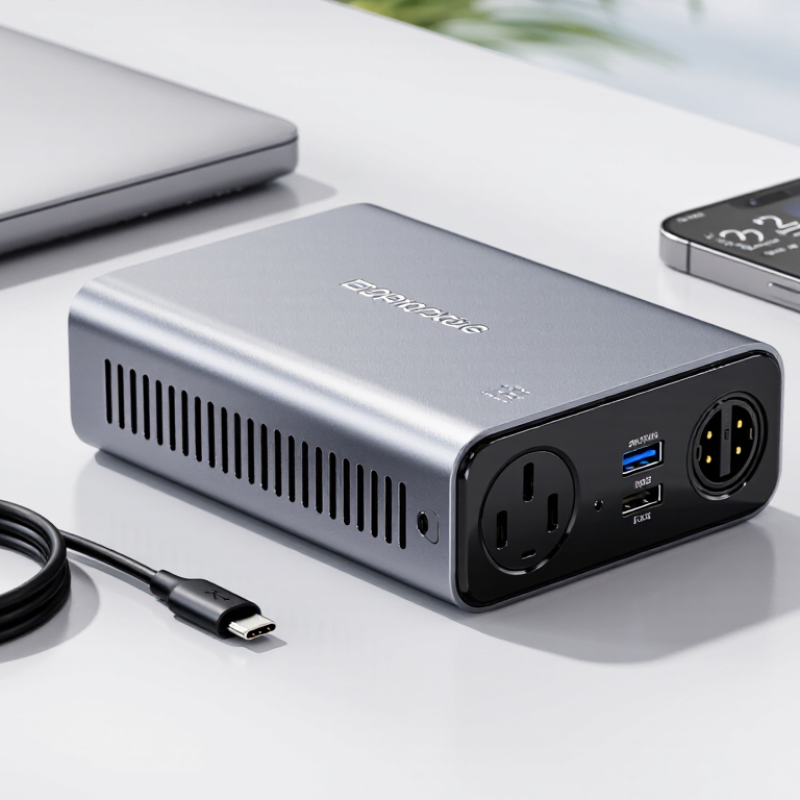
A compact lightweight portable power converter is a small device that changes electrical power into a form another device can use. Depending on its design, it may adjust voltage, convert direct current to alternating current, or provide power through USB ports. Its purpose is practical: to make compatible electronics usable away from a standard wall outlet, such as at a campsite, in a vehicle, or during a temporary power interruption.
Size is only part of the definition. A useful converter balances weight with output capacity, connectors, and heat management. For example, a phone charger may need little power, while a laptop or small appliance can require much more. Check the device’s input label and the converter’s rated output before connecting them. The figures matter. A converter rated below the load may shut down, overheat, or fail to run the device reliably.
Portability also depends on details that are easy to overlook. A short cable, a clear status light, and a stable case can make setup easier on a crowded table or in a car. Keep vents unobstructed, and use the converter only with compatible power sources. That sounds simple. It isn’t always. Power ratings describe limits, not a promise that every device will work smoothly, so some extra capacity can be useful.
| Dimension | Description | Practical Considerations |
|---|---|---|
| Definition | A compact, lightweight portable power converter is a small, transportable device that changes electrical power from one form or voltage to another so compatible equipment can use it. | The term can describe different devices. Check the stated input and output rather than relying on the word “converter” alone. |
| Primary purpose | It adapts available power to the voltage, current type, or outlet format required by a device. | It does not create energy; it must be connected to a suitable power source, such as a vehicle outlet, battery, or mains supply. |
| Common conversion types | Examples include DC-to-AC conversion, DC-to-DC voltage conversion, and AC-to-DC conversion. | A DC-to-AC device is commonly called an inverter. Other converters may provide a different DC voltage or convert AC power to DC. |
| Typical uses | Portable converters may power or charge compatible small electronics, communication equipment, lighting, and other low-power devices while travelling or working away from fixed outlets. | Suitability depends on the converter’s output rating and the connected device’s requirements. High-power appliances may exceed its capacity. |
| Input and output ratings | Specifications identify the accepted input voltage and the available output voltage, current, and power. | Match the input to the source and the output to the device. A connector that fits does not guarantee electrical compatibility. |
| Power capacity | Capacity is usually stated in watts (W); current may also be specified in amperes (A). Portable models differ substantially in output capacity. | Compare the device’s continuous power demand with the converter’s continuous rating. Some equipment also draws a higher brief start-up surge. |
| Portability | A compact design typically uses a small enclosure and limited connections to reduce space and carrying weight. | Size and weight vary by capacity, cooling needs, enclosure, and included cables. Confirm the actual dimensions and weight in the product specifications. |
| Output waveform | For DC-to-AC models, the output may be described as pure sine wave or modified sine wave. | Check equipment guidance when powering sensitive electronics, motors, or devices with specific waveform requirements. |
| Efficiency and heat | Conversion is not perfectly efficient; some input energy is lost, often as heat. | Keep ventilation openings clear and follow the specified operating conditions. A converter may become warm during normal use. |
| Safety features | Depending on its design, a converter may include overload, short-circuit, over-temperature, or low-voltage protection. | Protection features vary. Use the device according to its instructions and do not exceed its input or output limits. |
| What it is not | A converter is not necessarily a battery, a power station, or a travel plug adapter. | A plug adapter changes connector shape only; a converter changes electrical characteristics. A battery or power station stores energy separately. |
It changes electrical power into a form compatible electronics can use. Some models adjust voltage, convert DC to AC, or provide USB power.
It can power compatible devices at a campsite, in a vehicle, or during a temporary outage. Check the available power source first.
Compare the device’s input label with the converter’s output rating. The numbers matter. A rating that is too low may cause shutdown or unreliable operation.
Yes. Compare both, especially when powering equipment with a motor. Starting demand may differ from regular operating demand.
Converting power uses some energy and produces heat. Keep its vents clear, and unplug it if the casing becomes unusually hot.
A short cable, clear status light, and stable case can help on a crowded table or inside a vehicle. Small details count.
No. Check that the input matches your power source and the output matches your device. The listed ratings are limits, not guarantees.
It may shut down, overheat, or fail to run the device reliably. Extra capacity can help, though I would still verify the specifications carefully.
A compact lightweight portable power converter is a small device that changes electrical power from one form or voltage to another, making it suitable for use away from fixed power sources. It typically includes input and output connections, conversion circuitry, control components, and safety features. Depending on its design, it may provide AC or DC output at different voltage levels and power ratings. Understanding the converter type and its limits helps users choose equipment that matches the devices they need to operate.
When comparing models, consider weight, dimensions, rated output, conversion efficiency, operating temperature, and available protection against overload or overheating. To Optimize size and weight of portable power conversion equipment, balance portability with sufficient capacity and reliable performance rather than choosing the smallest option alone. These converters can support travel, outdoor activities, mobile work, and backup needs. Use them in a dry, well-ventilated location, keep within the specified ratings, and follow the manufacturer’s operating and storage instructions.

 JDI Power Supply