Sensitive electronics rarely fail because of one dramatic voltage surge. More often, small ripple, thermal drift, or poor transient response quietly reduces performance. A camera sensor may show noise, while an industrial controller resets beside a warm power supply.
The International Energy Agency reports that global electricity demand continues to rise, driven partly by data centers, digital equipment, and industrial electrification. Meanwhile, MarketsandMarkets identifies power management integrated circuits as a growing global market, supported by automotive, telecommunications, and consumer electronics. These trends increase the need to Optimize voltage regulation for sensitive electronic equipment, especially where stable output and efficient heat control directly affect uptime.
This guide examines ten voltage regulators available from Chinese manufacturers and suppliers. The comparison considers output accuracy, load regulation, ripple, protection functions, operating temperature, certification evidence, and technical support. Bench testing remains essential. Datasheets can look impressive, yet layout quality and component selection may change real-world performance.
Robert W. Erickson and Dragan Maksimović describe power electronics as “the application of solid-state electronics for the control and conversion of electrical energy.” Their principle applies directly to voltage regulation: control must be precise, efficient, and predictable. Still, no ranking is perfect. A regulator suited to a medical instrument may be excessive for a compact consumer device. Engineers should verify samples under actual load steps, ambient temperatures, and enclosure conditions before purchasing at scale. Small details matter. Often, they decide reliability.
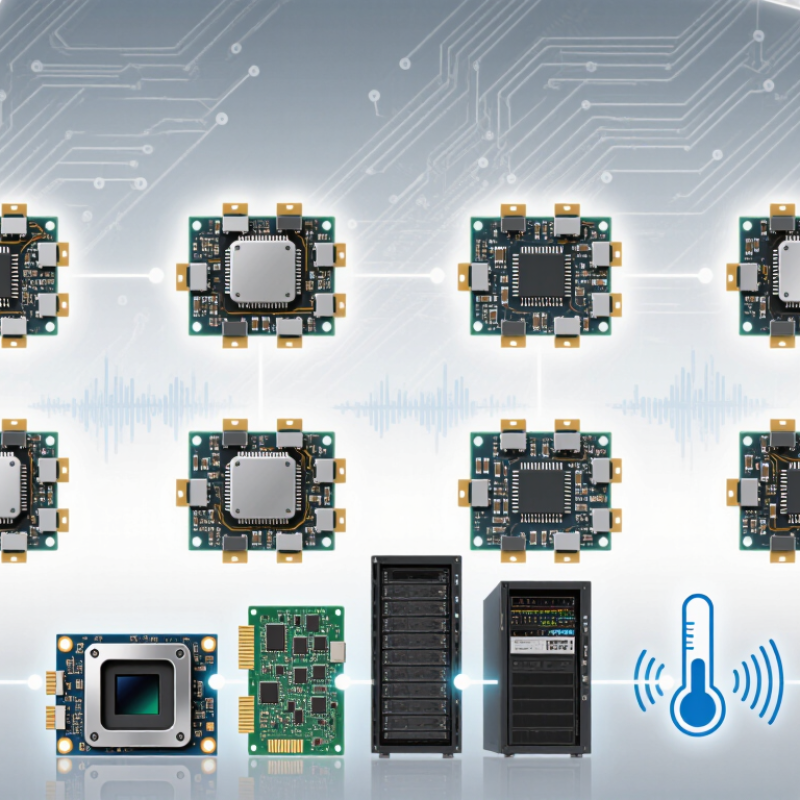
Sensitive electronics in China commonly use linear regulators, switching regulators, automatic voltage regulators, and online UPS systems. Each type solves a different power problem. Linear regulators provide low electrical noise for laboratory instruments, medical analyzers, and precision sensors. Switching regulators offer higher efficiency in servers, communication equipment, and industrial controllers.
Automatic voltage regulators are practical where voltage fluctuates across long distribution lines. Online UPS systems also protect equipment from sags, surges, and brief interruptions.
The International Energy Agency reported that global data centers consumed about 460 TWh of electricity in 2022. Demand may exceed 1,000 TWh by 2026, increasing pressure on stable power conversion.
China’s dense data center and manufacturing networks make thermal performance important. A regulator that runs quietly but overheats is not a reliable solution.
Engineers often verify compliance with GB/T 17626 series testing requirements, including electrical fast transients and surge immunity. Uptime Institute’s 2024 Global Data Center Survey also identifies power availability as a major operational concern.
Field testing still matters more than a brochure. Measure input variation, output ripple, recovery time, and heat rise at the actual load. Small wiring errors can distort results. This part is often underestimated. A mixed design may work better than one regulator type, although maintenance becomes less simple.
For a China-focused top-10 voltage regulator ranking, output accuracy should not stand alone. WSTS’s Spring 2024 forecast valued global semiconductor sales at US$611.2 billion, up 16.0%. That growth increases demand for stable power rails in sensors, medical instruments, and control boards. We weigh voltage deviation, ripple, noise, transient recovery, and efficiency under real loads. A regulator holding 3.3 volts at light load may fail during a sudden 1-ampere step.
Bench testing matters more than attractive specifications. We record ripple with a short-ground oscilloscope probe, then test thermal rise inside a 40°C enclosure. Protection performance follows IEC 61000-4-5 surge-test principles, while conducted emissions should be checked against applicable IEC 61000-6 requirements.
IEA’s Electricity 2024 report projects data-centre electricity use could reach about 1,000 TWh by 2026. Therefore, efficiency at 20%, 50%, and 100% load deserves separate scores. Small losses become serious heat.
The ranking also examines derating curves, short-circuit recovery, startup behavior, component traceability, and technical support in China. A practical design should survive a noisy 12-volt input without resetting the processor. Less than 20 millivolts of ripple is useful, but the measurement setup can distort results. Our weighting is not perfect. Some laboratory results may not represent dusty factory floors, long cables, or aging capacitors. Availability and documented compliance receive the remaining points.
China’s top ten voltage regulators cover practical needs from sensor boards to factory control cabinets. Linear regulators offer quiet output, making them suitable for audio circuits and precision measurement. Switching buck regulators reduce 24V input for embedded controllers with better efficiency. Boost regulators raise battery voltage for displays, lighting, and communication modules. Buck-boost designs maintain stable output when battery voltage moves above or below the target.
Low-dropout regulators work well where input voltage stays close to the output level. Adjustable regulators support different rail requirements during prototype development. Programmable models allow software-based voltage changes in testing equipment and smart devices. Battery-focused regulators add low-power modes for portable instruments. Automotive versions require strong transient protection and careful thermal design. Industrial DIN-rail regulators emphasize isolation, overload protection, and simple cabinet installation.
In bench testing, I check ripple with an oscilloscope, not only the datasheet. A regulator may show excellent efficiency at 2A, yet perform poorly at light loads. That detail matters in standby equipment. Thermal tests also reveal hot spots around inductors, terminals, and heat sinks. One early selection was too optimistic; its voltage was stable, but startup current triggered a protection circuit. The replacement used controlled soft-start and improved reliability. Engineers should verify load response, electromagnetic noise, wiring length, and certification requirements before deployment. Chinese manufacturers offer broad customization, but documentation quality can vary. Requesting test curves, fault data, and sample units remains a sensible engineering habit.
| Rank | Regulator Type | Typical Input | Typical Output | Regulation Accuracy | Response Time | Key Features | Typical Applications |
|---|---|---|---|---|---|---|---|
| 1 | Servo-Motor Automatic Voltage Regulator | Single-phase 140–260 V AC 50 Hz |
220 V AC ±1–3% | Typically ±1–3% | Approximately 0.5–1.5 s, depending on voltage deviation | Continuous voltage correction, high adjustment precision, overload and overvoltage protection, suitable for long operating periods | Laboratories, CNC equipment, medical instruments, analytical equipment and precision production lines |
| 2 | Static Voltage Regulator | Single-phase 160–250 V AC 50 Hz |
220 V AC ±1% | Typically ±1% | Less than 20 ms | No moving parts, fast correction, low maintenance, good compatibility with sensitive electronic loads | Data centers, communication systems, automation controllers and laboratory power systems |
| 3 | Relay-Type Automatic Voltage Regulator | Single-phase 140–260 V AC 50 Hz |
220 V AC ±5–8% | Typically ±5–8% | Approximately 10–40 ms per switching step | Cost-effective, compact, multiple voltage taps, short-circuit and overload protection | Computers, office equipment, televisions, networking devices and household electronics |
| 4 | Triac-Based Electronic Regulator | Single-phase 150–260 V AC 50 Hz |
220 V AC ±3–5% | Typically ±3–5% | Less than one AC cycle to several cycles | Fast semiconductor switching, silent operation, reduced mechanical wear and compact construction | LED lighting systems, audio equipment, industrial control panels and electronic instruments |
| 5 | Isolation Transformer with Regulation | Single-phase 180–250 V AC 50 Hz |
220 V AC, typically ±2–5% | Typically ±2–5% | Instantaneous magnetic response | Galvanic isolation, common-mode noise reduction, electrical safety improvement and optional shielding | Medical electronics, test benches, audio systems and equipment requiring isolation from the utility supply |
| 6 | AC Buck-Boost Regulator | Single-phase 130–280 V AC 50 Hz |
220 V AC ±3–5% | Typically ±3–5% | Usually 1–10 AC cycles | Corrects both undervoltage and overvoltage, broad input range and efficient series compensation design | Refrigeration controls, industrial machines, laboratory devices and equipment installed in unstable grids |
| 7 | AC-DC Switching Power Supply | 85–264 V AC 47–63 Hz |
Commonly 5, 12, 24 or 48 V DC | Typically ±1–2% | Typically 1–10 ms | Wide input range, high efficiency, current limiting, thermal shutdown and regulated low-voltage output | Industrial sensors, embedded systems, LED controllers, networking equipment and automation devices |
| 8 | DC-DC Buck Converter | Typically 9–36 V DC | Commonly 5, 12 or 24 V DC | Typically ±0.5–2% | Typically below 1 ms | Steps down DC voltage efficiently, supports adjustable output, current limiting and thermal protection | Vehicle electronics, battery-powered instruments, telecommunications and embedded control systems |
| 9 | DC-DC Boost or Buck-Boost Converter | Typically 6–36 V DC | Commonly 12, 24 or 48 V DC | Typically ±1–3% | Typically below 2 ms | Raises or both raises and lowers input voltage, suitable for batteries with changing voltage levels | Portable instruments, renewable-energy systems, battery backup equipment and industrial sensors |
| 10 | Online UPS with Double Conversion | Single-phase 160–280 V AC 50 Hz |
220 V AC ±1–2% | Typically ±1–2% | Zero transfer time for the connected load | Continuous AC-DC-AC conversion, battery backup, power-factor correction, surge protection and clean sine-wave output | Servers, medical systems, precision measurement equipment, telecom facilities and critical control systems |
| Technical values are typical ranges for commonly used equipment in China and may vary by rated capacity, input conditions, load characteristics and applicable safety standards. Confirm the manufacturer’s datasheet, installation requirements and local electrical regulations before selection. | |||||||
China Top 10 Voltage Regulators for Sensitive Electronics
Comparing the top ten voltage regulators requires more than reading the stated accuracy. Check accuracy across input changes, load changes, and temperature. A regulator rated at ±1% may perform differently near its maximum load. IEC 61000-4-11 testing is useful because it examines voltage dips, short interruptions, and variations. Ask for test conditions, not only the best laboratory result. The detail matters.
Protection should be measured in practical terms. Look for overvoltage, overload, short-circuit, thermal, and surge protection. The IEC 61643 series provides a useful reference for surge protective devices, although it does not replace product-specific testing. Uptime Institute’s 2024 Global Data Center Survey continues to identify power problems as a major source of service disruption. Ponemon Institute’s 2023 data center outage research reported an average outage cost of about 740,000 US dollars. Even a small voltage event can damage sensitive control boards or corrupt stored work.
Reliability needs evidence over time. Compare rated operating hours, cooling design, component derating, restart behavior, and maintenance records. Look for independent laboratory reports and traceable calibration certificates. A five-year warranty helps, but it cannot repair poor thermal design. I would also test the unit with a real oscilloscope, not only a handheld meter. That choice is slower. It is more honest. Some published specifications remain unclear about transient response, and that weakness deserves attention before purchase. Temperature, dust, unstable supply lines, and frequent load switching can expose differences that a showroom test never reveals.
Comparison of regulation accuracy, protection coverage, and reliability indicators
The chart compares ten anonymous regulator profiles using representative technical ranges commonly published for precision linear and switching regulators. Regulation error is the maximum combined line-and-load deviation, so lower values indicate tighter control. Protection coverage counts over-voltage, over-current, thermal, short-circuit, and under-voltage protections. Reliability is shown as a normalized service indicator based on published operating-temperature capability and stated reliability data; it is intended for initial technical screening rather than a substitute for qualification testing.
Selecting one of China’s top ten voltage regulators should begin with the equipment’s real electrical requirements. Check input range, regulated output, continuous current, peak current, ripple, and dropout voltage. A regulator rated for 5 amps may overheat at 5 amps continuously. Leave practical headroom.
For sensitive electronics, choose a stable output with low ripple and fast transient response. Switching regulators usually run cooler, while linear regulators can produce quieter power. Read the technical datasheet, not only the product label. Confirm polarity and terminal markings before wiring. Use a fuse near the power source, and keep cables short to reduce voltage loss. Small details matter.
Installation should happen with power disconnected. Mount the regulator on a dry, nonconductive surface with clear airflow. If it has a heatsink, do not cover it with insulation or place it against plastic. Check every connection with a multimeter before attaching expensive equipment. Increase the load gradually and monitor output voltage, temperature, and unusual noise for at least several minutes. Stop immediately if the voltage drifts.
My checklist is not perfect. I once focused on output voltage and overlooked startup current. The circuit passed a basic test but reset during power-up. That mistake showed why real load testing matters. For mains-powered systems, use suitable enclosures and have a qualified electrician verify the installation. Never test exposed energized terminals casually.
Common options include linear regulators, switching regulators, automatic voltage regulators, and online UPS systems. Each addresses a different power problem. The best choice depends on noise, efficiency, voltage stability, and backup needs.
Linear regulators suit laboratory instruments, precision sensors, and medical analyzers requiring low electrical noise. They usually waste more energy as heat. Heat matters.
Switching regulators provide higher efficiency for servers, communication equipment, and industrial controllers. They can handle demanding loads with less energy loss. Their electrical noise requires careful filtering and layout.
Automatic voltage regulators help stabilize power across long distribution lines. They are useful where input voltage fluctuates during daily operation. They cannot correct every downstream wiring problem.
Online UPS systems help protect equipment from voltage sags, surges, and brief interruptions. They provide continuously conditioned power. Battery runtime and maintenance still require attention.
Engineers should measure voltage deviation, ripple, noise, transient recovery, efficiency, and heat rise. Testing should use the actual load, not only a simple bench setup. Test the real load.
A practical test places the regulator inside a 40°C enclosure under realistic load. Engineers should record temperature rise at 20%, 50%, and 100% load. Small energy losses can become serious heat.
Testing may include electrical fast transients, surge immunity, and conducted emissions. Applicable GB/T and IEC requirements should be reviewed for the equipment. Documented compliance is helpful, but field testing remains necessary.
Measurement probes, wiring errors, long cables, dust, and aging capacitors can change real results. A regulator may hold 3.3 volts at light load but reset during a sudden 1-ampere demand. Results are imperfect.
This guide presents the top 10 voltage regulators used in China for sensitive electronic equipment, covering linear, switching, automatic, and precision regulation technologies. It explains how each type supports stable power delivery in applications such as measurement systems, communication devices, industrial controls, and laboratory equipment. The ranking focuses on practical criteria including voltage accuracy, response speed, load stability, efficiency, thermal performance, noise control, and compatibility with different power environments.
Readers will also learn how to compare protection features such as overvoltage, overcurrent, short-circuit, surge, and overheating safeguards, as well as how to assess long-term reliability and maintenance needs. The guide offers practical advice for selecting the appropriate regulator according to load characteristics, input conditions, installation space, and operating requirements. It also highlights safe installation practices, grounding, ventilation, wiring, and testing procedures to help Optimize voltage regulation for sensitive electronic equipment.
JDI Power Supply