Industrial power converters rarely fail in dramatic ways. More often, heat, vibration, dust, and repeated electrical stress quietly reduce their working life. A converter may look stable inside a clean laboratory, yet behave differently beside a steel press or a high-speed motor. This introduction examines China’s top 10 industrial power converter manufacturers through that practical lens.
The comparison considers conversion efficiency, thermal design, protection functions, component quality, service response, and evidence from real industrial installations. It also asks whether manufacturers can Enhance durability of industrial power conversion systems under continuous loading. Cooling paths matter. So do enclosure seals, capacitor selection, firmware stability, and accessible maintenance points. A small weakness can become an expensive shutdown.
Dr. Michael Pecht, founder of the Center for Advanced Life Cycle Engineering, has stated, “Reliability is not a product attribute; it is a process.” His observation is especially relevant here. A reliable converter depends on design discipline, production control, installation quality, and ongoing monitoring. Not every supplier publishes enough field data. That limitation deserves attention. Marketing claims alone cannot prove long service life.
The manufacturers discussed in this guide represent different strengths, including variable-frequency drives, modular rectifiers, industrial UPS systems, and customized power platforms. Their rankings should not be treated as universal truth. Factory conditions differ. A mining site, semiconductor plant, and water-treatment facility impose very different demands. Careful buyers must match technical evidence with actual operating conditions before choosing a long-term partner.
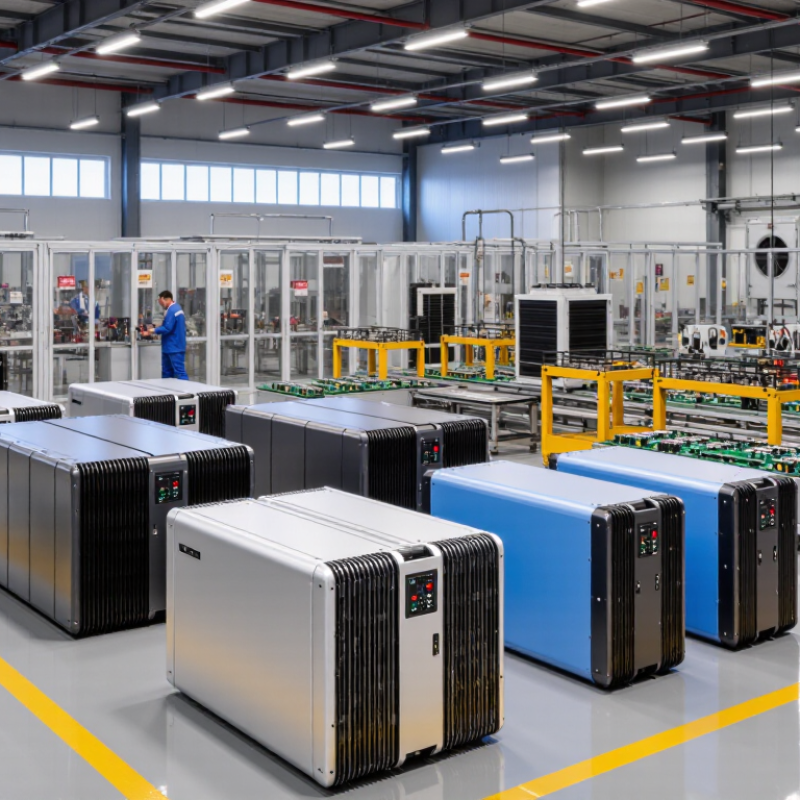
An industrial power converter is a device that changes electrical energy into a usable form. It may convert AC to DC, DC to AC, or adjust voltage and frequency. In factories, converters control motors, welding systems, pumps, compressors, and automated production lines. Their role is practical: deliver the right power at the right moment. A conveyor motor, for example, should accelerate smoothly instead of receiving a sudden electrical shock.
The U.S. Department of Energy reports that motor-driven equipment consumes about 70% of electricity used in U.S. manufacturing. This makes converter efficiency an operating concern, not merely a technical detail. IEC 61800-9-2 also evaluates the efficiency of complete drive systems, including converters and motors. A well-matched converter can reduce speed-related waste, limit starting current, and improve process control. It can also support regenerative braking in heavy machinery. Small improvements matter.
Industrial power converters are not automatically efficient. Poor sizing may create harmonic distortion, excess heat, and premature component failure. The IEA’s Energy Efficiency 2023 report places industry at roughly 37% of global final energy demand. That figure shows the scale of the challenge. Yet energy savings depend on installation, load patterns, cooling, and maintenance. The boundary is not always clean. A converter may look efficient in laboratory testing but perform differently beside dust, vibration, and uneven loads. Plant audits should measure real operating conditions, not trust a nameplate alone.
| No. | Industrial Converter Type | Power Conversion Function | Typical Input | Typical Output | Common Power Range | Typical Efficiency | Industrial Role and Applications |
|---|---|---|---|---|---|---|---|
| 1 | AC–DC Rectifier | Converts alternating current into regulated direct current. | Single-phase or three-phase AC, commonly 110–480 V | 12–1,500 V DC | 50 W–1 MW+ | 85%–98% | Provides the DC bus used in automation equipment, battery chargers, telecom systems, and variable-frequency drives. |
| 2 | DC–DC Converter | Steps DC voltage up, down, or to an isolated regulated level. | 12–1,000 V DC | 5–1,500 V DC | 10 W–500 kW | 90%–98% | Matches voltage levels between batteries, control circuits, sensors, industrial computers, and power distribution buses. |
| 3 | DC–AC Inverter | Converts direct current into controlled single-phase or three-phase AC. | 24–1,500 V DC | 110–690 V AC | 100 W–5 MW+ | 90%–99% | Drives motors and supports solar systems, energy storage, uninterruptible power supplies, and backup power installations. |
| 4 | AC–AC Converter | Changes AC voltage, frequency, phase, or waveform without an intermediate fixed DC output. | 110–690 V AC | 24–690 V AC | 500 W–10 MW | 90%–98% | Controls motor speed, soft-starts heavy machinery, and regulates voltage in industrial heating and process equipment. |
| 5 | Variable-Frequency Drive | Rectifies AC, creates a DC link, and inverts it into variable-frequency AC. | 200–690 V AC | Three-phase variable-frequency AC | 0.4 kW–10 MW+ | 95%–98% | Provides precise induction- and permanent-magnet-motor control while reducing starting current and energy consumption. |
| 6 | Uninterruptible Power Supply Converter | Combines rectifier and inverter stages to maintain continuous regulated power. | Single-phase or three-phase AC | Stable AC and DC outputs | 1 kVA–5 MVA+ | 90%–97% in double-conversion mode | Protects control systems, data equipment, medical devices, and production lines from outages, voltage variation, and electrical noise. |
| 7 | Battery Charger and Power Converter | Converts AC or DC input into a controlled charging profile for industrial batteries. | 85–480 V AC or DC bus input | 12–1,000 V DC | 100 W–1 MW | 88%–97% | Supports lead-acid, lithium-ion, nickel-based, and other battery systems used in backup power, material handling, and energy storage. |
| 8 | Regenerative Converter | Returns braking or excess mechanical energy to the DC bus or utility grid. | Motor-drive DC link or AC system | Controlled AC or DC regeneration | 5 kW–10 MW | Typically 95%–99% | Improves energy recovery in cranes, elevators, test benches, centrifuges, conveyors, and high-inertia machinery. |
| 9 | Power-Factor-Correction Converter | Shapes input current to reduce harmonics and increase power factor. | Single-phase or three-phase AC | Regulated DC bus | 300 W–1 MW | 92%–99% | Reduces reactive power and electrical distortion in high-power supplies, factory automation, welding equipment, and industrial computing systems. |
| 10 | Isolated Industrial DC Power Supply | Provides galvanic isolation and regulated DC power through a transformer-based or high-frequency topology. | 85–480 V AC or DC | 5–48 V DC, with higher-voltage options | 5 W–10 kW | 80%–96% | Supplies PLCs, relays, instrumentation, communication devices, safety circuits, and other sensitive control loads. |
Note: The voltage, power, and efficiency figures are representative industrial ranges. Actual specifications depend on topology, cooling method, isolation requirements, switching frequency, load profile, and applicable electrical standards.
It changes electrical energy into a usable form. It may convert AC to DC, DC to AC, or adjust voltage and frequency. Factories use converters for motors, pumps, compressors, welding systems, and automated lines.
They deliver suitable power at the right moment. A conveyor motor can accelerate smoothly instead of receiving a sudden electrical shock. This may reduce starting current, mechanical stress, and speed-related energy waste.
Yes, when its capacity matches the real load. Efficient control can reduce wasted energy during speed changes and partial operation. However, laboratory results may not reflect dusty, hot, or uneven factory conditions.
AC-DC converters support automation equipment and charging systems. DC-DC converters adjust voltage for sensors, control boards, and industrial drives. Inverters create stable AC output from stored DC power. Frequency converters regulate motor speed.
Check the input range, output stability, efficiency, and thermal design. Review overload performance, response time, protection functions, and repair access. Spare-part availability matters. Future load growth should also be considered.
Air cooling is simpler, but dust can block airflow and shorten service life. Liquid cooling may support high-power installations with greater heat density. It also adds pumps, coolant, and maintenance work. The best choice depends on the workshop environment.
An incorrectly sized converter may produce harmonic distortion and excess heat. These conditions can damage components or cause unstable equipment behavior. Sizing should reflect starting currents, changing loads, and surrounding machinery. A nameplate alone is not enough.
Useful documents include test data, wiring diagrams, operating limits, and protection details. Certifications support evaluation, but they do not prove field reliability. Installation experience still matters, especially near welding equipment and large motors.
Remote monitoring can reveal temperature, load changes, and fault conditions. It is useful for distributed equipment. Poor network design may create communication or control risks. The system needs careful setup.
China’s industrial power converter sector offers a broad range of solutions for converting, controlling, and conditioning electrical energy in demanding environments. This overview explains the role of industrial power converters in improving voltage regulation, energy efficiency, system stability, and operational safety. It also outlines the main criteria for evaluating leading manufacturers, including engineering capability, product reliability, customization, quality control, technical support, and compliance with relevant industry standards.
The article introduces ten representative Chinese manufacturers without focusing on brand promotion, highlighting their approaches to product development and industrial service. It reviews key converter technologies and product categories, such as AC-DC, DC-DC, DC-AC, frequency conversion, and modular power systems. Their applications across automation, renewable energy, transportation, telecommunications, manufacturing, and infrastructure are compared to clarify different performance and cost considerations. By understanding these factors, users can select suitable solutions and Enhance durability of industrial power conversion systems.

 JDI Power Supply