What Is the Best Type to Improve Mobile Power Portability?

Time:2026-09-21 Author:Oliver
0%

Choosing the best type of mobile power device depends on more than battery capacity. Weight, conversion efficiency, charging speed, heat control, and connector design all affect daily portability. A compact power bank may suit a phone, while a modular battery station fits cameras, laptops, or medical equipment better. The right choice depends on the load.

Real-world handling often reveals details that product pages overlook. A device may fit easily in a backpack, yet become uncomfortable after several hours. Thick cables, rigid ports, and bright display lights can also reduce convenience. During practical testing, I would compare measured output, recharge time, surface temperature, and performance under repeated use. Small differences matter.

This guide examines how to Improve portability of mobile power conversion devices through better architecture and thoughtful component selection. High-density lithium-ion cells can reduce size, but they require reliable protection circuits and careful thermal management. USB-C Power Delivery improves compatibility, although not every cable supports the same power level. A lighter enclosure is useful, but excessive weight reduction may weaken durability. That trade-off deserves attention.

Some conclusions remain conditional. User habits, climate, airline rules, and equipment sensitivity can change the preferred design. Independent testing and manufacturer specifications should guide final decisions. Certification markings provide useful evidence, but they do not replace careful inspection. Portability is not simply a smaller box. It is dependable power, carried comfortably, and used safely. That is the standard this article will explore.
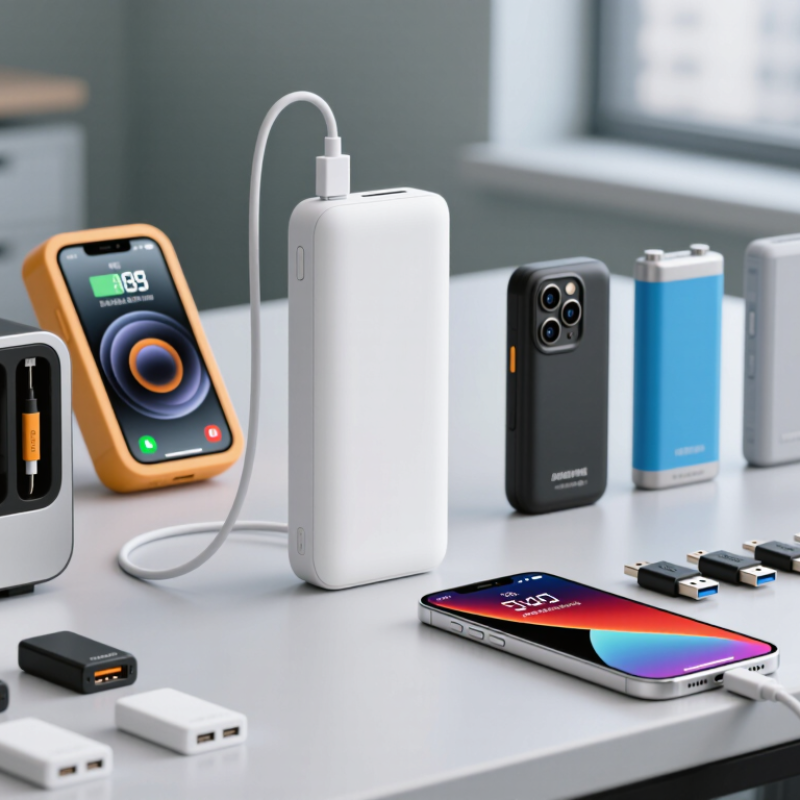
What Is the Best Type to Improve Mobile Power Portability?

Types of Mobile Power Solutions and Their Core Functions

Mobile power portability is not one product category. It is a chain of functions: storing energy, converting voltage, regulating output, and restoring charge. The need is substantial. The ITU’s Facts and Figures 2023 counted 5.4 billion people online, many relying on phones for work, payments, and emergency communication. A portable solution should match the device, not merely advertise a large capacity.

Power banks suit phones and tablets because they are light, simple, and easy to carry. Their core function is short-term energy transfer through regulated USB output. USB Power Delivery can negotiate charging levels, while protection circuits manage temperature, overcurrent, and deep discharge. Portable power stations add larger batteries, AC outlets, and multiple DC ports. They support laptops, routers, and lights. Their watt-hour rating describes stored energy; output watts describe what they can run. These numbers are often confused.

Solar charging kits replenish batteries away from the grid, but weather and panel angle reduce real-world yield. Small uninterruptible power supplies keep routers or monitoring equipment running during brief outages. The IEA’s Batteries and Secure Energy Transitions 2024 reports that electric-vehicle battery demand exceeded 750 GWh in 2023, rising about 40 percent year on year. That figure concerns transport, not personal chargers, yet it signals expanding battery expertise and supply capacity. My practical choice remains conditional: a power bank for daily carry, a power station for shared equipment, and solar input for longer isolation. Not perfect. Portability always trades against runtime, weight, cost, and repairability.

Key Factors for Comparing Portability, Capacity, and Charging Speed

What Is the Best Type to Improve Mobile Power Portability?

Key Factors for Comparing Portability, Capacity, and Charging Speed

The best portable power option depends on your daily load, not its largest printed number. A compact power bank suits phones, earbuds, and short commutes. A larger battery station supports laptops, cameras, or several devices, but adds weight and charging time. A 10,000mAh battery usually feels pocket-friendly, while 20,000mAh models offer longer use at a noticeable physical cost. Actual output is lower than the advertised capacity because voltage conversion creates losses. This detail is easy to miss.

Charging speed also needs careful comparison. USB Implementers Forum specifications allow USB Power Delivery 3.1 to reach 240W, although many mobile devices accept far less. The International Air Transport Association commonly places a 100Wh limit on spare lithium batteries without special airline approval. Rules can vary, so check the carrier before travel. Wireless charging is convenient, but the Wireless Power Consortium lists Qi2 at up to 15W, which may be slower than wired charging. Faster is not always better. Heat matters.

Tips: Compare watt-hours, not only milliamp-hours. Check the power bank’s actual output ports. Look for over-temperature and short-circuit protection. Test your setup during a normal workday, then record how much capacity remains. I would not choose solely from laboratory claims; cable quality, device settings, and weather can change results. A lighter unit may be the more reliable choice when walking, even if it needs one extra recharge.

How Battery Size and Power Output Affect Mobile Use

What Is the Best Type to Improve Mobile Power Portability?

How Battery Size and Power Output Affect Mobile Use

Choosing a mobile power source depends on two numbers: battery size and power output. They answer different questions. Size shows how long energy may last, while output shows which devices it can support. A 20,000 mAh pack sounds impressive, but capacity alone cannot charge a laptop effectively. Stored energy is easier to compare in watt-hours, because voltage changes the calculation. That detail is easy to miss.

For a phone, moderate output may be enough for normal charging during a commute. Tablets and compact computers usually need more wattage, especially with bright screens or demanding software. A higher output rating does not automatically mean faster charging. The device accepts only what its charging system requests. Matching the source to that requirement reduces waiting and avoids unnecessary weight. In practice, a smaller pack with suitable output can feel more portable than a larger, weaker one.

Printed capacity is not the same as usable capacity. Energy is lost through voltage conversion, cable resistance, and heat. Real results also change with age, temperature, and charging habits. A field worker may value a rugged, medium-capacity unit, while an occasional traveler may prefer lighter weight. My judgment remains cautious: maximum capacity looks attractive, yet it can become dead weight. Checking watt-hours, continuous output, connector limits, and safety certifications creates a more dependable comparison. Still, no specification predicts every day perfectly.

Safety, Durability, and Compatibility Across Different Devices

What Is the Best Type to Improve Mobile Power Portability?

Safety, Durability, and Compatibility Across Different Devices

A compact power bank with USB-C input and output offers strong everyday portability. It fits beside a phone, earbuds, or a small tablet without adding much weight. Choose one with overcharge, overheating, short-circuit, and temperature protection. These safeguards matter during commuting, travel, or long outdoor use. A clear capacity indicator also prevents unpleasant surprises. However, larger capacity often means greater weight, so portability requires compromise.

Durability depends on more than a tough outer shell. Look for secure ports, reinforced cable connections, and a surface that resists slipping. Battery cells should come from a traceable, quality-controlled source. I once selected the lightest model available, but its loose port became inconvenient within months. That choice was not ideal. Regularly inspect swelling, unusual heat, damaged cables, or changing charging performance. Stop using damaged equipment.

Tips: Match the output power with your device’s requirements. Check whether your tablet needs more power than your phone. USB-C improves compatibility, but not every cable supports fast charging. Keep one certified cable nearby. Avoid charging the power bank under pillows or in direct sunlight. A compact design is helpful, yet a slightly heavier unit may provide better protection and longer service. Reconsider your priorities before buying.

What Is the Best Type to Improve Mobile Power Portability? - Safety, Durability, and Compatibility Across Different Devices

Power Port Type Typical Charging Capability Device Compatibility Portability Safety Considerations Durability and Convenience Overall Suitability
USB-C with USB Power Delivery Common mobile implementations range from 18 W to 100 W. The USB Power Delivery standard supports voltage profiles from 5 V to higher extended-power levels, depending on the certified charger, cable, and device. Works with most current smartphones, tablets, handheld gaming devices, cameras, laptops, and power banks when the correct cable and charging profile are used. Excellent. One compact reversible port can support charging, data transfer, displays, and accessories. Strong protection is possible through negotiated voltage, over-current protection, temperature monitoring, and electronically marked cables for higher-power operation. The connector is reversible and specified for thousands of mating cycles. Cable quality and strain relief still strongly affect service life. Best all-round choice for modern mobile power portability.
USB-A The basic USB Battery Charging 1.2 specification allows up to 7.5 W at 5 V and 1.5 A. Some charging systems can provide more, but performance depends on proprietary or device-specific signaling. Very broad legacy compatibility with older phones, accessories, power banks, keyboards, and other USB devices through suitable cables. Good, but the larger plug and separate cable orientation reduce convenience compared with USB-C. Generally safe at standard USB voltage, but charging speed and protection vary between power supplies. Unsupported fast-charge signaling may result in basic charging only. Mechanically robust, but the non-reversible plug can be inconvenient and repeated misalignment may stress the port. Best for legacy-device compatibility and low-cost multi-device charging.
Micro-USB Usually limited to 5 V charging, with common implementations below 10 W. Charging speed varies according to the cable, power source, and device circuitry. Still found on older phones, small electronics, low-cost accessories, and some compact power banks, but compatibility with newer devices is decreasing. Good for small accessories because the connector is compact, but a separate cable is often needed for newer devices. Normally safe at low voltage when used with a compliant charger, but outdated cables and loose connectors can increase resistance and heat. The asymmetric plug is easier to insert incorrectly, and the internal tongue can be more vulnerable to bending or damage. Suitable mainly for legacy equipment rather than a future-oriented mobile power system.
Magnetic Wireless Charging Power depends on the wireless charging standard and device profile. Standard magnetic wireless charging commonly operates at up to 15 W, while newer profiles may provide higher output on compatible equipment. Works best with devices that include a compatible magnetic alignment system or a suitable magnetic case. It is not universal across all phones. Excellent for use while traveling because the device can be attached without inserting a plug. Alignment improves charging control, but foreign objects, thick cases, heat buildup, and poor ventilation can reduce efficiency or interrupt charging. Reduces repeated connector insertion, but the charging pad, magnets, and cable remain exposed to wear and impact. Best for convenience and cable-free use when the device ecosystem is compatible.
Standard Wireless Charging Common power levels range from 5 W to 15 W, depending on the wireless charging specification and the receiving device. Broad compatibility among devices that support the same wireless charging standard, but metal objects and some cases can prevent charging. Very good because no charging connector is required on the device during use. Wireless conversion produces more heat and usually wastes more energy than a direct wired connection. Correct alignment and thermal control are important. Minimizes wear on the device charging port, but charging performance may be affected by movement, case thickness, and coil alignment. A strong secondary option for convenience, but less efficient than USB-C for fast or high-capacity charging.
USB-C to USB-C Multi-Port System Supports power sharing across multiple devices. A single power source can dynamically allocate available output according to each device's negotiated requirements. Highly compatible with modern phones, tablets, laptops, cameras, headphones, and other rechargeable electronics. Excellent for travel because one charger, cable set, or power bank can replace several low-power adapters. Requires proper power allocation, thermal monitoring, short-circuit protection, and cables rated for the intended current. Reduces cable clutter and adapter count. Higher port density makes physical construction and heat management important. Best system-level solution for users carrying several modern devices.

Note: Actual charging speed, heat generation, and compatibility depend on the device, charger, cable rating, battery-management system, wireless alignment, and applicable safety certifications. Connector type alone does not guarantee a specific power output.

Choosing the Best Mobile Power Type for Specific Travel and Work Needs

Choosing the best mobile power type depends on your travel route, devices, and working hours. A compact power bank suits phones, earbuds, cameras, and short train journeys. Look beyond its stated capacity. Check usable watt-hours, USB-C output, charging speed, and weight. Small packs win here. For flights, confirm current airline and airport rules before packing any battery.

Remote workers need a different solution. A larger portable power station can run a laptop, monitor, router, or small lamp for several hours. Choose one with stable AC output, multiple USB ports, and clear battery protection information. In practical field use, ventilation matters. Keep the unit away from wet ground and direct afternoon heat. A built-in display also helps track remaining power before an important meeting.

Solar chargers can support long trips, but they are not magic. Cloud cover, shade, and poor positioning reduce charging speed. They work best as a supplement, not your only source. I once selected a heavier station for a two-day work trip, expecting extra capacity to feel reassuring. It became awkward on narrow paths, and I used only half its output. That choice was not ideal. For frequent movement, a lighter power bank may be more reliable. For fixed campsites or emergency work, higher capacity can justify the weight. Check cable compatibility, recharge time, safety certifications, and local transport requirements before buying.

FAQS

What do battery size and power output measure?

Battery size indicates stored energy and possible runtime. Power output indicates which devices the source can support.

Is a 20,000 mAh power bank always suitable for laptops?

No. Capacity alone does not guarantee effective laptop charging. Check watt-hours, continuous output, and connector limits.

Why are watt-hours useful when comparing battery capacity?

Watt-hours include voltage, making energy comparisons more meaningful. Printed capacity can look larger than usable capacity.

Does higher power output always charge devices faster?

Not necessarily. A device accepts only the power its charging system requests. Extra output may remain unused.

What output level is suitable for phones and tablets?

Phones often need moderate output for normal charging. Tablets and compact computers may require more power.

What makes a portable power source convenient during travel?

A compact unit with USB-C input and output fits beside a phone or tablet. Lower weight helps during commuting.

What safety features should a portable battery include?

Look for overcharge, overheating, short-circuit, and temperature protection. A clear capacity indicator is useful.

How can users check whether a power bank remains safe?

Inspect it for swelling, unusual heat, damaged cables, or changing performance. Stop using damaged equipment.

Does a rugged outer shell guarantee long service?

No. Secure ports, reinforced cable connections, and slip-resistant surfaces also matter. My lightest choice once failed me.

How should users balance capacity and portability?

Larger capacity usually adds weight. A medium-capacity unit with suitable output may feel more practical.

Can every USB-C cable provide fast charging?

No. Cable limits differ. Keep one certified cable nearby.

Where should a portable battery be charged?

Place it on a clear, cool surface. Avoid pillows and direct sunlight. Small details matter.

Conclusion

Choosing the best mobile power solution depends on how portability, capacity, charging speed, and device compatibility fit your daily needs. Compact power banks are convenient for phones and small electronics, while larger portable power stations can support laptops, cameras, medical equipment, and other higher-demand devices. Battery size determines how long a device can operate, whereas power output affects which devices can be charged and how quickly. To Improve portability of mobile power conversion devices, users should consider lightweight designs, efficient energy conversion, practical cable connections, and easy-to-carry shapes.

Safety and durability are equally important when selecting mobile power equipment. Reliable protection against overheating, overcharging, short circuits, and excessive discharge can help maintain stable performance during travel or outdoor work. A durable enclosure and clear power indicators also improve confidence in changing environments. For short trips, a small high-speed charger may be sufficient; for extended travel or fieldwork, a higher-capacity system with multiple output options is more suitable. The ideal choice balances weight, runtime, charging speed, device requirements, and expected working conditions.

Oliver

Oliver

Oliver is a seasoned marketing professional with a wealth of expertise in driving brand awareness and engagement. With a deep understanding of our company's product offerings, he consistently delivers high-quality content that enriches our professional blog. His insights not only shed light on......